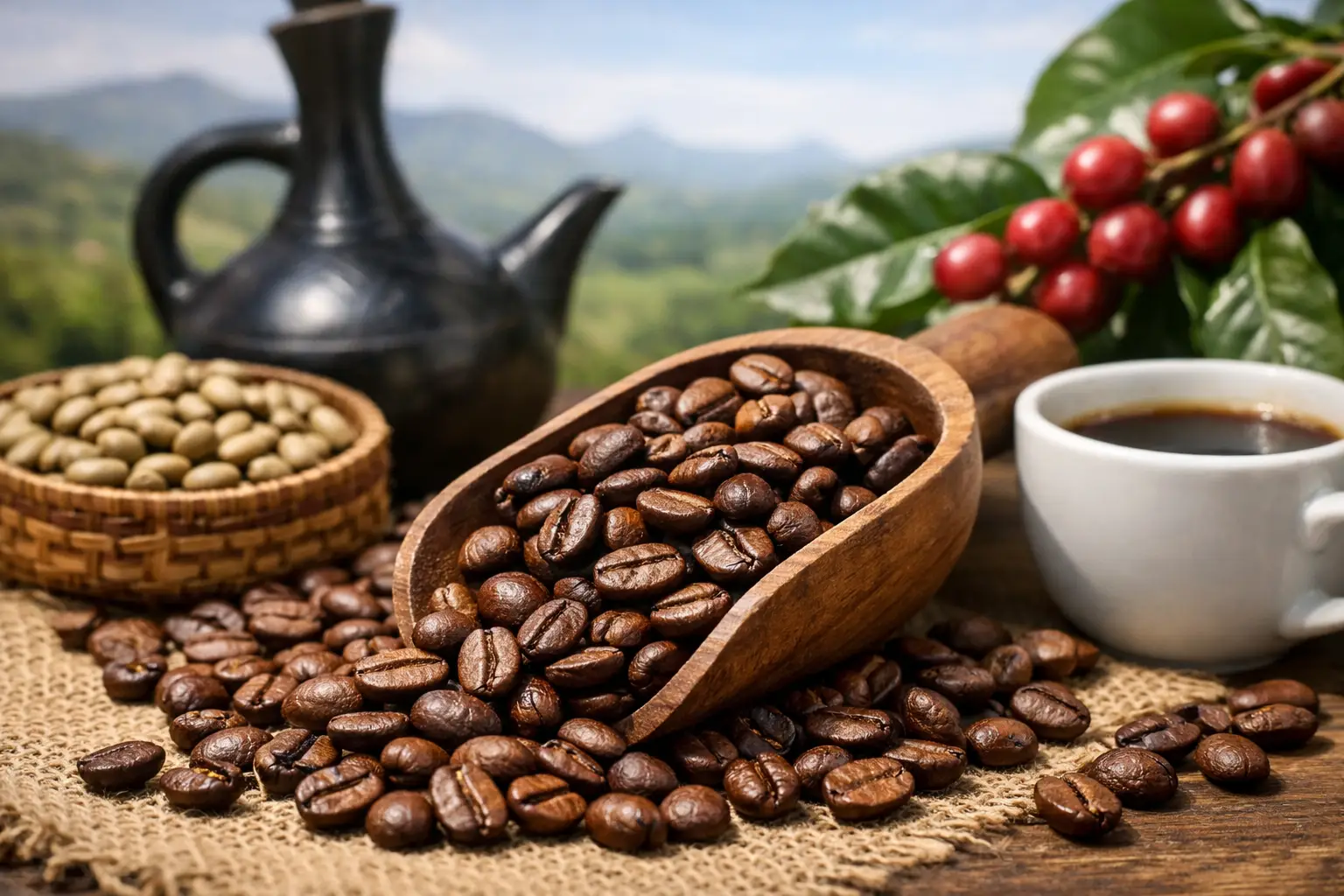
A truly memorable cup does not need flavor syrup, heavy sweeteners, or a dark roast to make an impression. Ethiopian yirgacheffe coffee beans are proof of that. They stand out through clarity, floral aroma, citrus brightness, and a kind of clean finish that feels refined rather than loud.
For coffee drinkers who care about both taste and purity, Yirgacheffe holds a special place. It offers character without excess. You can taste the altitude, the careful harvesting, and the natural elegance of the bean itself. That is part of why it continues to be one of the most respected origins in specialty coffee.
What makes Ethiopian Yirgacheffe coffee beans different
Yirgacheffe is a coffee-growing region in southern Ethiopia, widely associated with some of the most expressive Arabica coffees in the world. The region’s high elevations, fertile soil, and steady climate help produce beans with exceptional aromatic complexity. In the cup, that often means jasmine, bergamot, lemon zest, tea-like softness, and stone fruit sweetness.
Not every coffee from Ethiopia tastes the same, and not every Yirgacheffe lot tastes identical either. That variability is part of the beauty. Still, there is a recognizable profile many coffee lovers return to again and again – bright acidity, floral lift, silky body, and a finish that feels crisp and polished.
This is not the kind of coffee that hides behind roasting. It rewards precision. When sourced and roasted well, it delivers detail instead of heaviness.
Why origin matters so much in Yirgacheffe
With some coffees, origin is just background information. With Yirgacheffe, origin is the experience. The combination of altitude, heirloom varieties, and traditional cultivation practices gives these beans a distinct identity that is difficult to imitate elsewhere.
Many farms in the region grow coffee at elevations above 1,700 meters. Slower cherry development at higher altitude allows sugars and acids to mature more gradually, which helps create the layered flavor people associate with premium Ethiopian coffee. Handpicking also matters. Selective harvesting supports better uniformity, cleaner sweetness, and fewer defects in the final cup.
For buyers who value authenticity, origin is not a marketing detail. It is the reason the coffee tastes the way it does.
Processing changes the cup
If you have tried Yirgacheffe more than once and noticed very different flavor profiles, processing is likely the reason. Washed Yirgacheffe coffees tend to be especially clean and transparent. Floral notes become more defined, acidity feels brighter, and the cup can resemble black tea with citrus and white blossom.
Natural-processed Yirgacheffe can be more fruit-forward and lush. You may taste blueberry, ripe peach, or strawberry-like sweetness, with a fuller body and softer structure. Neither style is automatically better. It depends on whether you prefer precision and delicacy or richer fruit expression.
For many wellness-minded coffee drinkers, washed lots are especially appealing because they present such a crisp, pure profile in the cup.
Flavor notes you can expect
The most common question about Ethiopian Yirgacheffe coffee beans is simple: what do they actually taste like?
The answer depends on harvest, roast level, and brewing method, but several notes appear often. Floral aromatics are a hallmark. Jasmine is common, sometimes alongside honeysuckle or chamomile. Citrus notes can lean toward lemon, mandarin, or bergamot. Sweetness may show up as honey, peach, or apricot. The body is usually light to medium, never heavy unless the roast pushes too far.
That profile makes Yirgacheffe especially appealing to people who enjoy coffee black. It has enough natural dimension that it does not need anything added. If you normally rely on sugar to soften bitterness, a properly roasted Yirgacheffe can be a pleasant surprise. Its brightness is lively, but the finish should still feel clean and composed.
Is it always acidic?
Yirgacheffe is often described as bright, but bright does not mean harsh. High-quality acidity in coffee is more like structure than sharpness. Think of the freshness of citrus or the lift of ripe stone fruit, not sourness.
That said, brewing makes a difference. If the grind is too fine or the water temperature is too low, the cup can feel thin or overly pointed. If roasted too dark, the delicate notes flatten and the result loses what made the coffee special in the first place. Yirgacheffe is at its best when handled with restraint.
How roast level affects Ethiopian Yirgacheffe coffee beans
Yirgacheffe generally shines at light to medium roast levels. That range preserves the bean’s aromatic identity and allows the origin to speak clearly. Floral notes stay intact, fruit remains precise, and acidity feels elegant rather than hidden.
A darker roast can create more body and a more familiar chocolate-forward profile, but there is a trade-off. Push these beans too far and you mute the very qualities people seek out in Yirgacheffe. The cup may become smoky or generic, which defeats the point of buying a distinguished origin in the first place.
For home brewers, medium-light is often the sweet spot. It gives enough development for sweetness and balance while keeping the signature brightness and fragrance alive.
Best brewing methods for Yirgacheffe
These beans reward careful brewing, but that does not mean the process needs to be complicated. Pour-over methods such as V60 or Chemex tend to highlight Yirgacheffe beautifully because they emphasize clarity and aroma. You get a more transparent cup, which suits the bean’s delicate structure.
French press can work too, especially if you prefer a rounder mouthfeel, though some of the finer floral detail may feel less defined. AeroPress is a strong option for people who want flexibility. It can accentuate sweetness while still preserving brightness.
Espresso is more nuanced. Ethiopian Yirgacheffe coffee beans can make excellent espresso, but only when roasted and dialed in with intention. The shot may be intensely aromatic and citrusy, sometimes tea-like, which some drinkers love and others find less traditional. If you expect dense chocolate and low acidity, Yirgacheffe espresso may not be your first choice.
Water and grind matter more than people think
Because Yirgacheffe has such a clear flavor profile, small brewing mistakes show up quickly. Water that is too hot can exaggerate bitterness. A grind that is too coarse can leave the cup underdeveloped and weak. Even mineral content in water can affect whether the florals feel vivid or muted.
This is one reason premium coffee deserves a little patience. You do not need laboratory precision, but you do need care.
Who will enjoy Yirgacheffe most
Yirgacheffe is ideal for drinkers who appreciate nuance over heaviness. If you enjoy clean ingredients, naturally expressive flavor, and coffee that feels refined on its own, this origin makes sense. It is also well suited to people moving away from sugary café drinks and toward a purer daily cup.
It may be less ideal for someone who only enjoys dark, low-acid coffees with a dense, smoky finish. That is not a flaw in the bean. It is simply a matter of preference. Great coffee is not about forcing one profile on everyone. It is about choosing the right coffee for the way you want to drink.
For those seeking both craftsmanship and a cleaner coffee ritual, Yirgacheffe aligns beautifully with that standard. Brands that focus on organic sourcing, careful roasting, and unmasked flavor – including Yirga Specialty Coffee – understand that the bean itself should carry the experience.
How to buy better Ethiopian Yirgacheffe coffee beans
Start with freshness and transparency. Look for roast dates, processing details, and clear origin information rather than vague labels. If a bag simply says Ethiopian coffee without region or roast character, it tells you very little.
Consider your brewing style before you buy. Washed lots are excellent for pour-over drinkers who want floral precision. Natural lots are often better for those who enjoy deeper fruit sweetness. Whole beans are usually the best choice if you can grind at home, since pre-ground coffee loses aromatic detail faster.
If wellness matters to you, ingredient integrity matters too. Pure coffee should not need additives to become enjoyable. When the beans are well grown, well roasted, and brewed with care, the cup speaks for itself.
The best reason to choose Yirgacheffe is not that it is fashionable or widely praised. It is that, in the right cup, it reminds you how vivid coffee can be when nothing unnecessary gets in the way.
