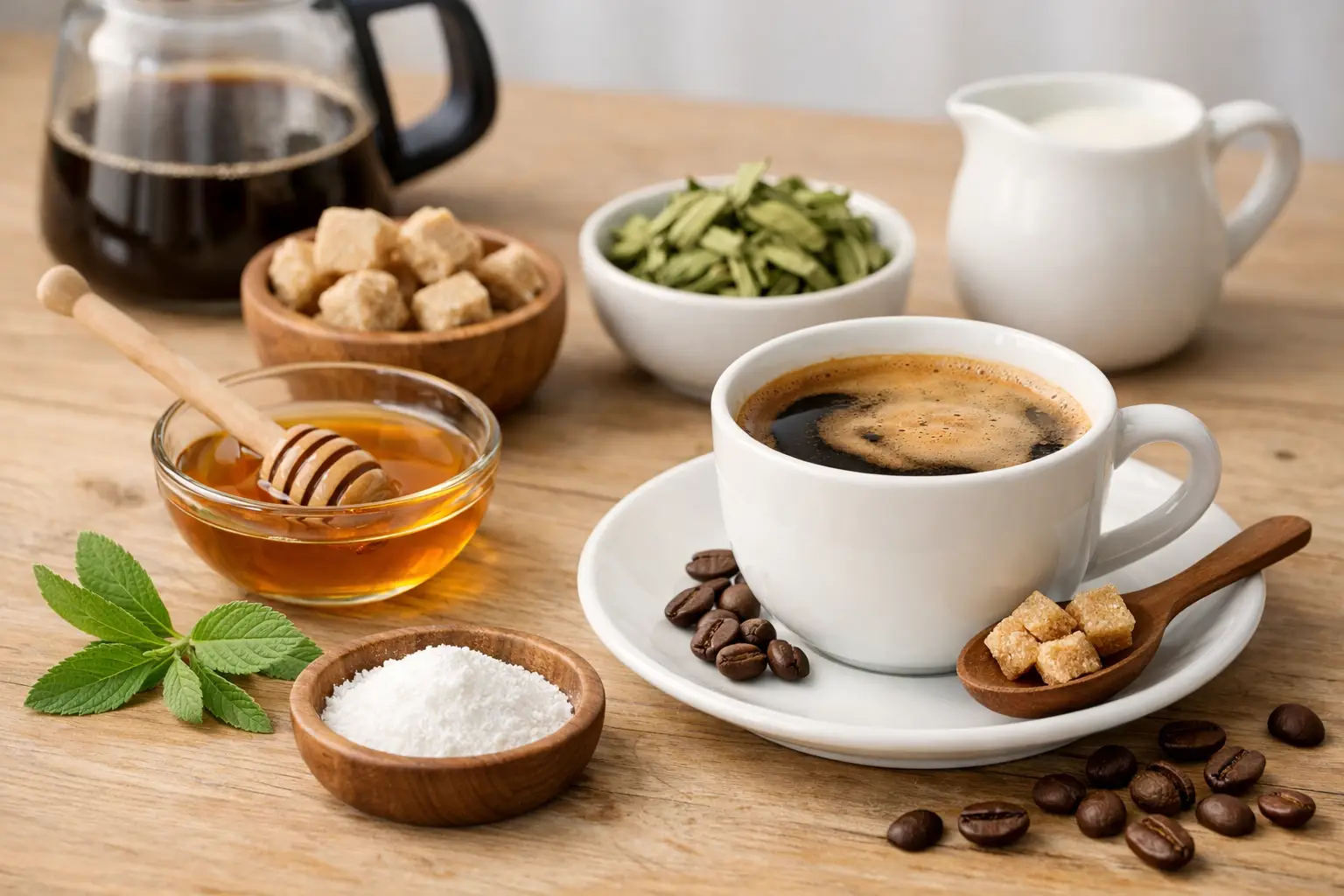
The fastest way to flatten a beautiful cup is to bury it under sweetness. That is why coffee with natural sweeteners deserves a more careful conversation. When the coffee is high quality – thoughtfully sourced, properly roasted, and brewed with intention – sweetness should support the cup, not silence it.
For people who love specialty coffee but prefer to avoid refined sugar, the goal is not simply to find a substitute. It is to preserve clarity, body, and aroma while adding a softer kind of sweetness that feels aligned with the drink itself. Done well, natural sweetening can make coffee more inviting without pushing it into dessert territory.
Why coffee with natural sweeteners works
Specialty coffee already carries natural sweetness. In a clean Ethiopian cup, for example, you may notice floral notes, citrus brightness, honeyed texture, or a gentle fruit character. Those qualities are not additives. They come from the bean, the altitude, the variety, the processing method, and the roast.
That matters because the best coffee with natural sweeteners starts with coffee that has something worth preserving. If the base is dull, bitter, or over-roasted, sweetener often becomes a cover-up. If the base is vibrant and balanced, sweetener can act more like seasoning. It rounds edges, softens sharpness, and brings certain notes forward.
This is where many commercial coffee drinks go wrong. They lean on syrups and processed flavorings until the coffee itself becomes background noise. A cleaner approach is more restrained. You should still recognize the bean in the cup.
The best natural sweeteners for coffee
Not every natural sweetener behaves the same way once it hits hot coffee. Flavor, texture, and intensity all matter.
Honey adds body and warmth
Honey is often the most intuitive choice because it mirrors flavor notes already found in many coffees. In lighter roasts, especially coffees with floral or citrus character, a small amount of honey can feel elegant rather than heavy. It also dissolves easily in hot drinks and adds a rounded texture.
The trade-off is that honey has its own personality. A darker, bolder honey can dominate a delicate coffee. If your cup has jasmine, bergamot, or stone-fruit notes, use a mild honey and use very little. A stronger honey may work better with espresso, moka pot coffee, or deeper chocolate-toned blends.
Date syrup brings depth
Date syrup has a richer profile – caramel-like, earthy, and slightly fruity. It suits people who want sweetness with more depth and a less floral finish than honey. In milk-based drinks, date syrup can be excellent because it blends into the body of the beverage and creates a smooth, comforting sweetness.
Still, date syrup is not neutral. It can make a bright filter coffee feel heavier than intended. It tends to work best with medium roasts, espresso drinks, or recipes where you want warmth and richness rather than sharp clarity.
Maple syrup offers a clean finish
Pure maple syrup can be surprisingly effective in coffee. It brings sweetness without the sticky density of some alternatives, and in the right amount it leaves a relatively clean finish. It pairs especially well with nutty, cocoa-forward coffees and with drinks that include milk or oat milk.
Its limitation is cost and character. Good maple syrup is distinct, and too much of it can steer the cup toward breakfast flavors instead of coffee flavors. A small pour is usually enough.
Stevia and monk fruit need restraint
Plant-based sweeteners such as stevia and monk fruit appeal to people seeking sweetness with very little sugar content. They can work, but they require a lighter hand than honey or maple syrup. In specialty coffee, their aftertaste can become more noticeable because the cup itself is cleaner and more expressive.
That does not mean they should be dismissed. In iced coffee, cold brew, or milk-based drinks, they can be practical options. But if you are drinking a nuanced single-origin pour-over, they may interfere more than they help.
What to avoid when sweetening specialty coffee
The issue is not just refined sugar. It is anything that overwhelms the cup.
Artificial syrups, heavily flavored creamers, and sweeteners with strong chemical aftertastes can erase the work behind the coffee – the farming, the processing, the roast development, and the brew method. If you care about origin and quality, it makes sense to choose ingredients that respect those details.
There is also a difference between sweetening and masking. If your coffee tastes harsh enough that it needs multiple pumps of syrup, the real problem may be the coffee or the preparation. Water temperature, grind size, freshness, and bean quality all shape the drinking experience before sweetness even enters the picture.
How to choose the right sweetener for your brew
Matching sweetener to brew style makes a noticeable difference.
For espresso
Espresso is concentrated, textured, and naturally intense. It can handle bolder sweeteners such as date syrup or a darker honey, especially in cappuccinos and flat whites. Because the volume is small, start with less than you think you need. Even a half teaspoon can shift the whole balance.
For pour-over and filter coffee
These methods showcase detail. If you sweeten them at all, use something subtle. A light honey is often the gentlest option. Maple syrup can also work in very small amounts. The point is to soften acidity or add comfort without muting origin character.
For cold brew
Cold brew is lower in perceived acidity and often naturally smooth, so sweeter additions can feel very natural here. Honey, maple syrup, and monk fruit all have a place, though liquid sweeteners tend to blend best. Date syrup can work if you want a richer iced drink with more body.
For milk-based drinks
Milk changes the equation by adding sweetness and texture of its own. That means your sweetener should complement both coffee and milk. Honey can bring elegance, while date syrup creates a fuller, dessert-like richness without needing flavored syrups. This is often the easiest entry point for people moving away from refined sugar.
Sweetness should fit the bean
Origin matters. A bright, floral Ethiopian coffee and a deep, earthy blend do not ask for the same treatment.
With a washed Yirgacheffe, natural sweetness may already feel vivid in the cup – think citrus, tea-like clarity, and a delicate honeyed finish. In that case, adding too much sweetener can blur the beauty that makes the coffee special. A restrained touch, or none at all, is often best.
With fuller-bodied coffees that lean toward cocoa, spice, or roasted nuts, a slightly deeper sweetener can feel more natural. This is one reason heritage and sourcing matter so much in a wellness-focused coffee experience. When you know what is in the cup, you can sweeten with intention rather than habit.
A cleaner daily routine
For many people, choosing coffee with natural sweeteners is part of a broader shift. They want better ingredients, fewer processed additions, and a cup that feels lighter but still satisfying. That does not require giving up pleasure. It usually means becoming more selective.
A high-quality organic coffee gives you a stronger starting point. Cleaner beans, careful roasting, and proper grinding create a cup with more natural balance, so you need less added sweetness in the first place. That is a better long-term habit than building a daily drink around sugar and flavoring.
At Yirga, that philosophy is simple: protect the integrity of the coffee, and let sweetness serve the cup rather than define it. The result is more refined, more honest, and often more enjoyable once your palate adjusts.
How to make the transition easier
If you are used to very sweet coffee, moving straight to unsweetened may feel abrupt. A gradual shift works better for most people.
Start by reducing sweetness slightly and switching the source at the same time. If you usually rely on sugar or syrup, try a smaller amount of honey or date syrup in the same drink style. Then pay attention to what changes. You may notice more aroma, more texture, and less heaviness after drinking.
It also helps to choose the right coffee. A naturally expressive bean with balanced acidity and real sweetness is far more forgiving during this transition than a bitter, low-grade roast. Good coffee makes restraint feel easier.
The best cup is not the sweetest one. It is the one where every element tastes intentional – the bean, the roast, the brew, and if you choose it, the sweetener too.
