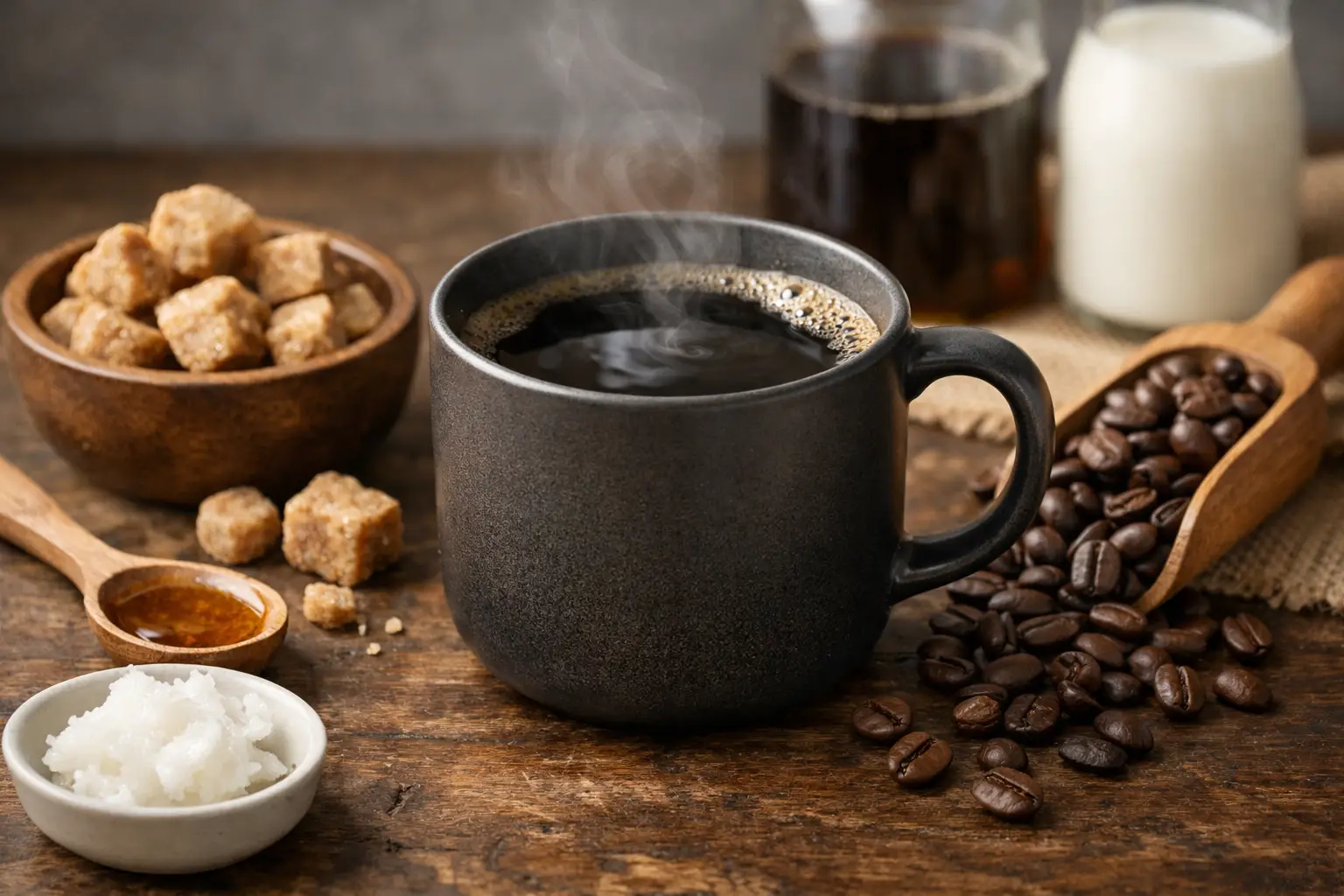
If your coffee only tastes good after two pumps of syrup and a spoonful of white sugar, the problem may not be your sweet tooth. It may be the coffee itself. Great no refined sugar coffee does not ask you to cover bitterness. It gives you enough natural sweetness, body, and aroma that the cup already feels complete.
That difference matters more than many people realize. Refined sugar can flatten flavor, mask low-quality roasting, and turn coffee into a dessert before the first sip is even finished. When you remove it, you start tasting what was there all along – floral notes, cocoa depth, soft fruit, toasted nuts, and the clean finish that specialty coffee is meant to deliver.
What no refined sugar coffee really means
No refined sugar coffee is exactly what it sounds like: coffee prepared without white sugar, brown sugar, flavored syrups, or heavily processed sweeteners. But in a quality-focused setting, it means something deeper. It means the drink is built to stand on its own.
That starts with the bean. Coffee grown at higher elevations, picked with care, and roasted with precision often carries its own natural sweetness. Ethiopian coffees are especially known for this. Depending on the lot and roast, you may notice notes that feel like jasmine, stone fruit, honey, citrus, or dark chocolate. None of that comes from additives. It comes from origin, varietal, and craftsmanship.
This is where people often get surprised. They expect sugar-free coffee to taste strict or thin. In reality, a clean cup can taste more layered than an overly sweet one. You lose the sugar rush, but gain clarity.
Why refined sugar changes the cup
Sugar does more than make coffee sweet. It alters structure. It softens acidity, hides roast defects, and makes different drinks taste more alike. A mediocre latte with syrup and a carefully brewed single-origin pour-over can end up sharing the same loud sweetness, which means the coffee itself stops being the point.
For drinkers who care about wellness, that trade-off is not small. Refined sugar adds calories quickly, can create an energy spike followed by a slump, and often pushes people toward larger, sweeter drinks just to feel satisfied. If coffee is part of your daily rhythm, those habits add up.
A no refined sugar coffee approach brings the drink back into balance. You notice texture more. You notice how milk changes the flavor. You notice whether the beans were roasted to preserve character or simply darkened until everything tasted smoky. It becomes easier to tell the difference between a clean, premium cup and one that depends on sweetness to feel complete.
How to make no refined sugar coffee taste better
The easiest way to enjoy coffee without refined sugar is not to force yourself through bitter cups. It is to choose coffee that is naturally more expressive from the start.
Start with better beans
If the beans are stale, low-grade, or roasted without care, removing sugar will make every flaw more obvious. Look for specialty-grade coffee with clear origin information and a roast profile designed for balance rather than blunt intensity. Organic beans can also appeal to drinkers who want a cleaner ingredient story overall.
Washed Ethiopian Arabica often works beautifully for this style of drinking because it tends to deliver brightness and floral aroma without harshness. Natural-process coffees can also be excellent if you enjoy more fruit-forward sweetness. If you prefer a heavier, more grounded cup, a carefully handled blend with some Robusta can add body while still staying clean.
Match the roast to your taste
Many people assume darker roast means stronger and therefore better without sugar. Sometimes it does the opposite. Very dark roasts can create bitterness that practically asks for sweetener. A medium or medium-dark roast often gives you more balance, especially if you want chocolate, caramel, or fruit notes without sharp edges.
There is no universal best roast here. If you drink espresso with milk, medium-dark can feel plush and satisfying. If you enjoy black coffee, medium roast often shows more of the bean’s natural sweetness.
Brew for clarity, not force
A lot of bitter coffee is simply over-extracted. Water that is too hot, grounds that are too fine, or brew time that runs too long can make even excellent beans taste rough. When you are not covering the cup with sugar, brewing technique matters more.
Pour-over methods tend to highlight nuance and natural sweetness. French press brings out body, though it can feel heavier. Espresso can be beautiful without sugar if the shot is dialed in properly, but a rushed or poorly balanced shot becomes unforgiving fast. Cold brew is another strong option for people transitioning away from sugar because it naturally lowers perceived acidity and can taste smooth without much effort.
The role of milk and natural sweetness
Some coffee drinkers hear no refined sugar coffee and assume it means black coffee only. Not at all. Milk can be part of a refined, wellness-focused cup if it is there to support the coffee rather than bury it.
Steamed milk already contains lactose, which gives a gentle natural sweetness. In a well-made cappuccino or latte, that may be enough. Oat milk can amplify sweetness further, though it depends on the brand and formulation. Almond milk is lighter and nuttier, but sometimes less naturally sweet.
There is a difference between naturally sweet and artificially sweet-tasting. The best coffee bars understand that balance. A good milk drink should still let the espresso speak.
For people who want a little more sweetness without crossing into refined sugar, options like date syrup, honey, or cinnamon can work in moderation. Still, they change the profile of the drink. If your goal is to appreciate the coffee itself, use them as accents, not defaults.
Why origin matters in no refined sugar coffee
When sugar is absent, origin becomes more visible. The place where the coffee was grown starts to shape the entire experience.
This is one reason Ethiopian coffee holds such a strong place in refined, sugar-free coffee culture. Yirgacheffe, in particular, is often prized for its lifted floral aromatics, citrus brightness, and tea-like elegance. Those characteristics make the cup feel vivid without needing sweetness added on top. Other regions may lean more toward cocoa, spice, or berry, but the principle stays the same: the bean should bring enough personality to the cup that sugar feels unnecessary.
That heritage also changes how you relate to coffee. Instead of treating it as a caffeine vehicle, you start treating it as an ingredient with a story. Farm conditions, altitude, processing method, and roast style all become part of flavor. For a brand like Yirga Specialty Coffee, that connection between Ethiopian heritage, organic sourcing, and wellness is not a marketing flourish. It is the foundation of what makes a cleaner cup possible.
Is no refined sugar coffee for everyone?
Mostly, yes – but the path into it can look different.
If you currently drink very sweet coffee, going straight to unsweetened espresso may feel severe. That does not mean you are doing it wrong. It means your palate needs time. Start by reducing sweetness gradually, choosing better beans, and trying milk-based drinks that rely on natural sweetness rather than added sugar.
If you already drink black coffee, the shift may be less about removing sugar and more about raising standards. Better sourcing, fresher roasting, and cleaner brewing will matter more than any substitute sweetener ever could.
There are also practical exceptions. Some people simply enjoy sweeter drinks on occasion, and there is room for that. Purity does not have to become dogma. The real question is whether your everyday coffee supports your taste, your energy, and your standards. For many people, a no refined sugar coffee routine feels better precisely because it is more intentional.
What to look for when ordering or buying
If you want a consistently better cup, pay attention to how the coffee is described. Vague language usually signals a generic product. Specific language about origin, roast, tasting notes, and bean type usually means the coffee has been selected with more care.
You should also notice whether the café seems built around the coffee itself or around add-ons. Places that emphasize organic beans, precise brewing, natural ingredients, and balanced flavor are more likely to serve a cup that does not need sugar to become enjoyable.
At home, freshness matters just as much. Buy coffee in quantities you will use while it still tastes alive. Grind for your brew method, store it properly, and give yourself a week or two to adjust if you are coming from sweetened drinks.
A well-made cup without refined sugar is not missing anything. It is simply less distracted. Once your palate adjusts, that clarity becomes hard to give up.
The best coffee does not need to be rescued. It only needs to be respected.
