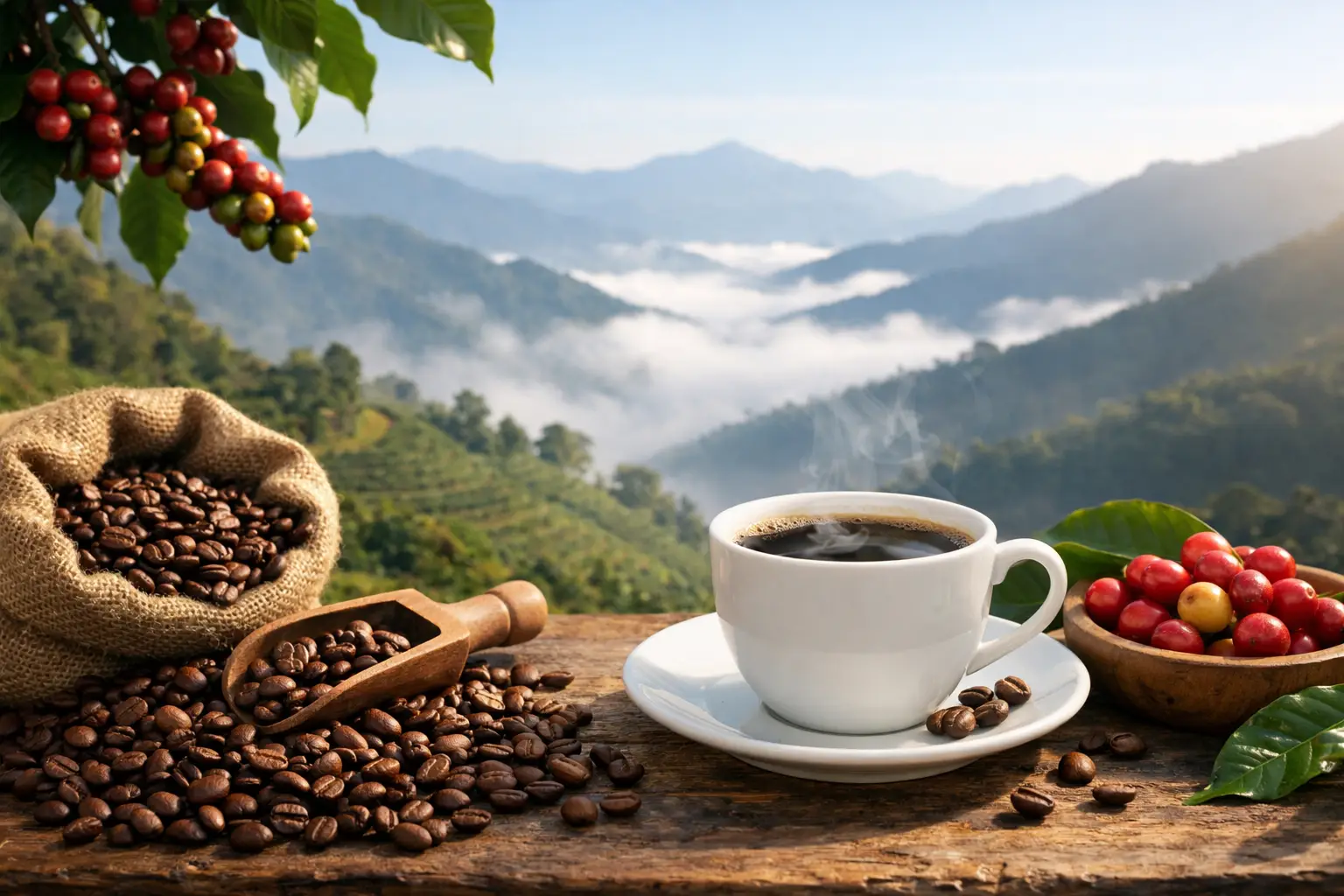
A coffee can look beautiful on the shelf and still taste flat in the cup. What often separates a memorable brew from an ordinary one is not clever packaging or dark roasting – it is where the coffee was grown. High altitude coffee beans earn their reputation in the field long before they reach the roaster, and that reputation is well deserved.
For anyone who values purity, flavor clarity, and a more refined daily cup, altitude is not just a romantic detail on a label. It is one of the most meaningful indicators of how a coffee may taste, how it will roast, and why it can deliver more character with less need for additives.
What high altitude coffee beans really mean
When coffee professionals talk about altitude, they are referring to the elevation at which the coffee plant is grown, usually measured in meters or feet above sea level. In general, coffees grown at higher elevations mature more slowly because temperatures are cooler and the environment is more demanding.
That slower development changes the bean itself. The seed inside the coffee cherry becomes denser and often more complex in flavor. Instead of producing a cup that feels broad but vague, high-grown coffee is more likely to show distinct notes – citrus, florals, stone fruit, cocoa, tea-like sweetness, or a clean honeyed finish, depending on origin and processing.
There is no single altitude that guarantees excellence. A coffee grown at 4,000 feet can be outstanding, and one grown higher can still disappoint if harvesting, processing, or roasting is careless. Still, elevation remains one of the clearest signs that a coffee had the potential to become something exceptional.
Why altitude changes flavor
The simplest answer is time. Cooler temperatures slow the ripening of the coffee cherry, giving sugars and organic compounds longer to develop. This often creates a cup with brighter acidity, more layered sweetness, and a more expressive aroma.
Density also matters. High altitude coffee beans are typically harder and more compact than lower-grown beans. During roasting, that density affects how heat moves through the bean. In skilled hands, it can produce remarkable clarity and structure. You taste more precision, not just more roast.
This is one reason high-grown Ethiopian coffees are so admired. In regions known for elevated farms, the cup can carry a graceful balance of floral fragrance, lively acidity, and clean sweetness that feels naturally complete. It does not need flavored syrups or heavy sweeteners to seem interesting.
High altitude coffee beans and cup quality
Altitude alone does not create luxury in the cup, but it often supports the qualities people associate with specialty coffee. The aroma tends to be more vivid. The acidity can feel crisp rather than sharp. Sweetness becomes more natural and integrated, and the finish is usually cleaner.
That clean finish matters more than many people realize. If you prefer coffee as part of a wellness-focused lifestyle, a cleaner, carefully sourced bean gives you more room to appreciate the coffee itself instead of masking bitterness or roughness with sugar and cream. The pleasure comes from the bean’s natural character.
This is where sourcing standards become essential. Handpicked cherries, organic cultivation, thoughtful processing, and precise roasting all protect what altitude helped create. Without that discipline, even excellent raw material can lose its identity.
Not every high-grown coffee tastes the same
It is tempting to assume that all high-elevation coffees share one flavor profile, but that is not how coffee works. Altitude shapes potential, while variety, soil, climate, and processing shape expression.
An Ethiopian Yirgacheffe grown at high elevation may show jasmine, citrus, and a tea-like elegance. A high-grown Latin American coffee might lean toward caramel, red fruit, and cocoa. Another coffee from a similar altitude could taste deeper and more structured if it is naturally processed or roasted more fully.
So when you see elevation on a label, read it as a meaningful clue, not a final verdict. It tells you the coffee may offer more density and complexity, but origin and craftsmanship still decide the final experience.
How roasting affects high altitude coffee beans
High-density beans reward precision and expose shortcuts. Because they are firmer, high altitude coffee beans often need careful roast development to bring out sweetness without muting their origin character.
Roast them too lightly and the cup can feel underdeveloped or overly sharp. Roast them too dark and many of the most beautiful nuances disappear under smoke and bitterness. The ideal roast depends on the bean, the process, and the intended brew method.
For many specialty coffees, a balanced light-to-medium roast allows altitude-driven qualities to stay visible. You can taste the clarity, the fragrant top notes, and the clean finish. That is especially valuable for drinkers who want coffee with depth but not heaviness.
Why higher elevation often aligns with cleaner coffee drinking
People often think of health-conscious coffee choices in terms of what gets added after brewing. Less sugar. Better milk. No syrups. That matters, but the bean itself matters first.
A well-grown, high-elevation coffee often carries enough natural sweetness and aromatic complexity to stand on its own. You are not trying to fix the cup. You are simply enjoying it. That creates a different relationship with coffee – one based on ingredient integrity rather than compensation.
For brands that focus on organic beans and a no-refined-sugar approach, high-grown coffee makes philosophical sense as well as sensory sense. It supports a cup that feels cleaner, more intentional, and more honest.
What to look for when buying high altitude coffee beans
The phrase sounds premium, and often it is, but it should not be accepted blindly. If you are choosing beans for home brewing, look beyond altitude alone.
Start with origin. Regions with strong high-elevation growing conditions often produce coffees with distinct identities, especially in Ethiopia. Then consider whether the beans are specialty-grade, how they were processed, and whether the roaster provides meaningful tasting notes instead of generic claims.
Freshness matters too. Even an excellent high-grown coffee will lose much of its beauty if it sits too long after roasting. If you brew at home, buy in amounts you can finish while the coffee is still vibrant.
Grinding is another quiet factor. Dense beans deserve a proper grind for your method, whether you are using pour-over, espresso, or French press. The wrong grind can flatten the cup and hide the very qualities you paid for.
Are high altitude coffee beans always better?
Often, but not automatically. Lower-elevation coffees can still be satisfying, especially when you want a softer, rounder, more chocolate-forward cup with lower acidity. Some drinkers genuinely prefer that profile, and preference matters.
High-grown coffees are also sometimes more expensive because production can be more labor-intensive and yields may be lower. That price can be worth it for complexity and clarity, but it depends on what you value in your cup.
There is also a brewing trade-off. Coffees with bright acidity and delicate aromatics can be stunning when brewed carefully, yet less forgiving if your water temperature, grind, or extraction is off. A simpler coffee may be easier to brew consistently.
So yes, altitude is an advantage. It is not a guarantee, and it is not the only path to enjoyment.
Why Ethiopian high-grown coffees stand apart
If you are drawn to coffees with elegance, fragrance, and a sense of place, Ethiopia remains one of the most compelling expressions of high-elevation cultivation. The country’s coffee heritage, diverse local varieties, and mountainous terrain create remarkable conditions for nuanced cups.
This is why Ethiopian coffees are so often described in sensory language that feels almost perfumed – florals, citrus peel, peach, bergamot, black tea, or soft berry sweetness. At their best, they are vivid yet clean, expressive yet composed.
For a brand rooted in that heritage, such as Yirga Specialty Coffee, high-altitude sourcing is not a trend claim. It is part of the foundation of cup quality, authenticity, and the pure coffee experience customers are actually tasting.
When you choose coffee, elevation should not be the only detail you notice. But it is one of the few details that tells a deeper story before the bag is even opened. A slower-growing bean, carefully harvested and thoughtfully roasted, carries a kind of quiet precision. You taste it in the fragrance, the sweetness, and the finish that lingers without weight.
