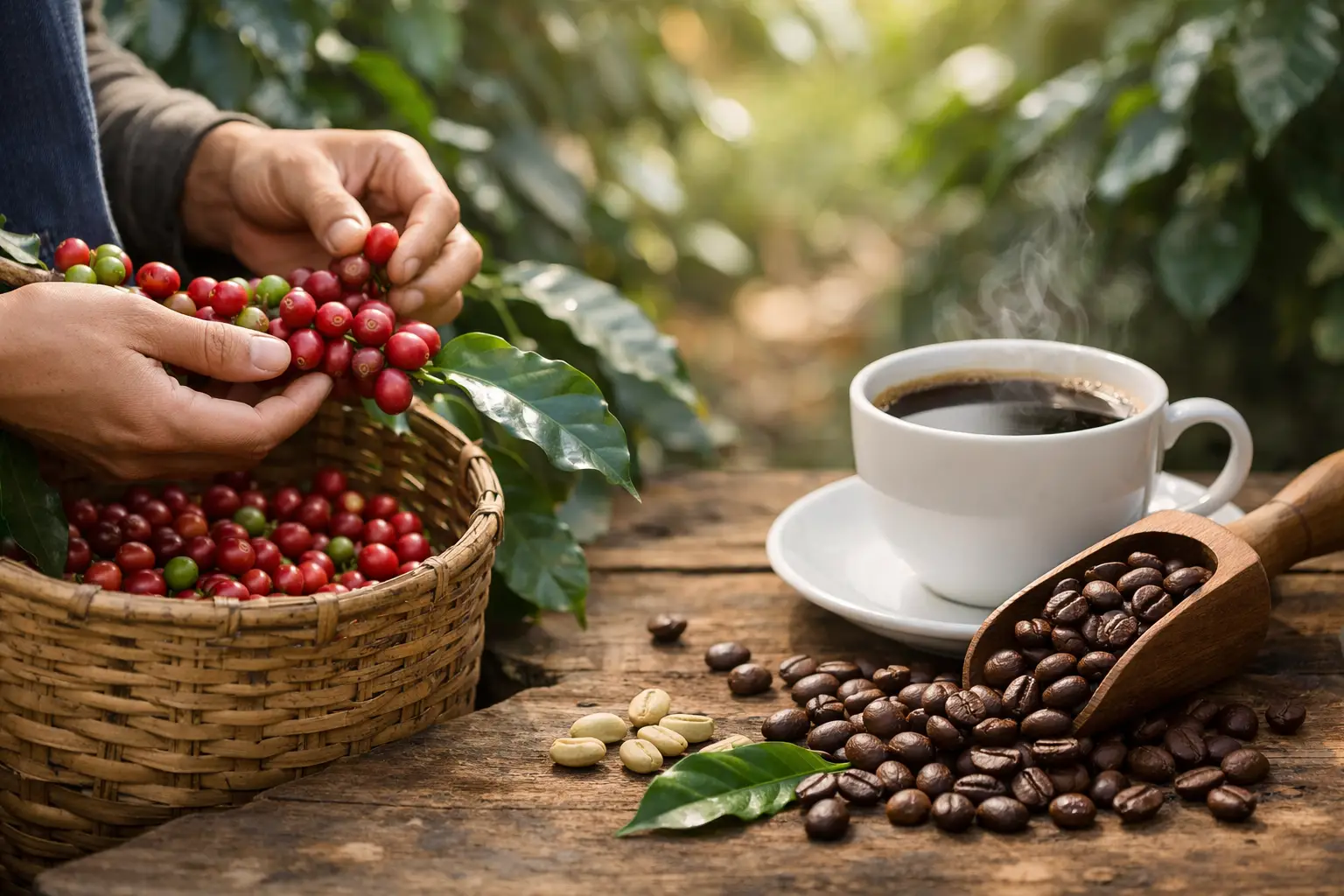
A remarkable cup often begins long before roasting, grinding, or brewing. With handpicked coffee beans, quality is shaped at the source, where each cherry is selected for ripeness rather than stripped from the branch all at once. That choice changes the flavor in the cup, but it also says something deeper about care, purity, and respect for the coffee itself.
For drinkers who pay attention to what goes into their bodies, this matters. Coffee is not just a caffeine ritual. It is an agricultural product with a clear chain of decisions behind it. When those decisions are thoughtful, the result is cleaner, more expressive, and far more satisfying.
What handpicked coffee beans really mean
The phrase sounds simple, but it points to a very specific standard. Coffee beans begin as seeds inside coffee cherries. On a single branch, cherries do not always ripen at the same pace. Some are ready, some are underripe, and some may already be drying out. Machine harvesting and strip picking often remove all of them together.
Handpicking is different. Workers return to the same trees and select only the cherries that have reached the right stage of ripeness. That slower process takes more labor and more skill, but it gives producers far better control over quality.
This is one reason premium coffees from high-altitude regions are so prized. In places known for careful cultivation, including celebrated Ethiopian growing areas, selective harvesting helps preserve the floral clarity, fruit brightness, and layered sweetness that would otherwise be dulled by uneven picking.
Why ripeness matters so much
Ripeness is not a cosmetic detail. It directly affects taste.
A properly ripe coffee cherry contains sugars, acids, and aromatic compounds in better balance. When processed and roasted well, those beans can produce sweetness, structure, and a clear finish. Underripe cherries tend to bring astringency, grassy notes, or a sharpness that feels thin rather than vibrant. Overripe fruit can introduce muddled flavors or unwanted fermentation.
That is why handpicked coffee beans often stand out in the cup. They start with more consistency. Instead of forcing the roaster to work around a mixed batch of uneven raw material, selective picking creates a stronger foundation for everything that follows.
There is still nuance here. Handpicking alone does not guarantee excellence. Poor processing can flatten beautiful fruit, and careless roasting can erase the benefits of a well-harvested lot. But when handpicking is part of a disciplined quality approach, it raises the ceiling significantly.
Handpicked coffee beans and cup clarity
If you have ever tasted a coffee that felt vivid and precise rather than merely strong, you have experienced cup clarity. This is one of the most compelling reasons people seek handpicked coffee beans.
Clarity means flavors feel distinct. Floral notes remain delicate instead of perfumed. Citrus tastes bright instead of sour. Chocolate notes feel clean rather than heavy. In a well-prepared cup, you can sense the coffee’s identity more easily because fewer defects and fewer unevenly developed beans are getting in the way.
For customers who prefer coffee without syrups or excessive sweetness, clarity matters even more. When the bean quality is high, the drink does not need much covering up. Its natural sweetness and aroma are enough. That is part of what makes specialty coffee feel refined – not because it is complicated, but because it is honest.
The connection between handpicking and wellness
Wellness in coffee is often reduced to what gets added after brewing. Sugar content, syrups, creamers, and processed flavorings all deserve attention. But the bean itself deserves equal care.
Handpicked coffee beans support a cleaner coffee experience because they reflect selectivity from the start. Better cherries generally mean fewer defects, less bitterness caused by poor raw material, and a more naturally balanced cup. That can make it easier to enjoy coffee in a simpler form, whether black or lightly finished with natural ingredients.
This does not mean handpicked coffee is automatically lower in caffeine or inherently healthier in a medical sense. It means quality at origin can reduce the need for heavy correction later. For many health-conscious drinkers, that is the real advantage. Pure coffee with character asks less from the cup and gives more back in flavor.
Why hand labor still matters in premium coffee
In many industries, automation improves consistency. In coffee farming, the answer is more complicated.
Machines can be efficient, especially on large farms with even terrain and a crop meant for volume. But some of the world’s most distinctive coffees are grown in conditions where precision matters more than speed. High-altitude plots, complex landscapes, and delicate varietals often benefit from manual harvesting because the picker can make judgments no machine can fully replicate.
That human judgment carries value. It protects the integrity of the fruit. It supports quality sorting before processing even begins. And it reinforces the idea that great coffee is crafted, not simply extracted at scale.
Of course, handpicking comes with trade-offs. It costs more, requires trained labor, and takes time. That is part of why genuinely high-quality coffee is never the cheapest option on the shelf. You are paying for selectivity, patience, and lower tolerance for compromise.
How roasting reveals the value of handpicked beans
Roasting cannot create quality that was never there. What it can do is reveal or hide what the farm delivered.
With handpicked coffee beans, the roaster usually has a more even batch to work with. Similar bean density and maturity allow for more controlled heat application. That often leads to better development and fewer harsh or baked flavors.
In practical terms, this means the final profile can stay true to the bean’s character. A floral Ethiopian coffee can remain elegant. A chocolate-forward blend can feel polished rather than blunt. A balanced medium roast can show sweetness and aroma without tipping into bitterness.
This is also why tailored roasting matters. Premium beans deserve precision. If the goal is a pure coffee experience rooted in origin and craftsmanship, the roast should support that identity rather than overwhelm it.
How to recognize quality in handpicked coffee beans
Not every bag will tell the full story, so a little observation helps. Look for details such as origin, elevation, varietal, and processing method. These do not replace taste, but they signal whether the coffee was treated as a distinct product rather than a generic commodity.
Flavor is still the clearest proof. Good handpicked coffee beans tend to show balance, a cleaner finish, and a more coherent profile from first sip to last. You may notice natural sweetness, a softer bitterness, and aromas that feel more defined.
Freshness also matters. Even excellent beans lose their edge when they sit too long. Buying from a specialty-focused roaster with a clear quality philosophy makes a difference. Brands that care about organic sourcing, careful roasting, and purity in preparation usually approach green coffee selection with the same discipline. That commitment is part of what shapes trust.
For those looking for coffee that aligns with wellness and taste, this is where brands like Yirga Specialty Coffee stand apart. The focus is not simply on serving coffee, but on curating beans with integrity and presenting them in a way that respects both heritage and health-conscious preferences.
Why origin and harvesting should be part of the conversation
Coffee is often discussed in terms of roast level alone, but that leaves out the most meaningful part of the story. Origin, farming conditions, and harvesting methods all shape what ends up in your cup.
Handpicked coffee beans remind us that quality is cumulative. It comes from the land, the variety, the altitude, the timing of harvest, the discipline of sorting, and the care taken during roasting. Remove one of those elements, and the result can still be pleasant. Honor all of them, and the cup becomes memorable.
For the modern coffee drinker, that is worth paying attention to. A better coffee routine is not always about drinking more. Sometimes it is about choosing beans with more intention, more purity, and more respect for the craft behind them.
The next time a coffee tastes unusually clean, layered, and naturally sweet, consider where that experience may have begun. Often, it started with someone standing at the tree, choosing only what was ready.
