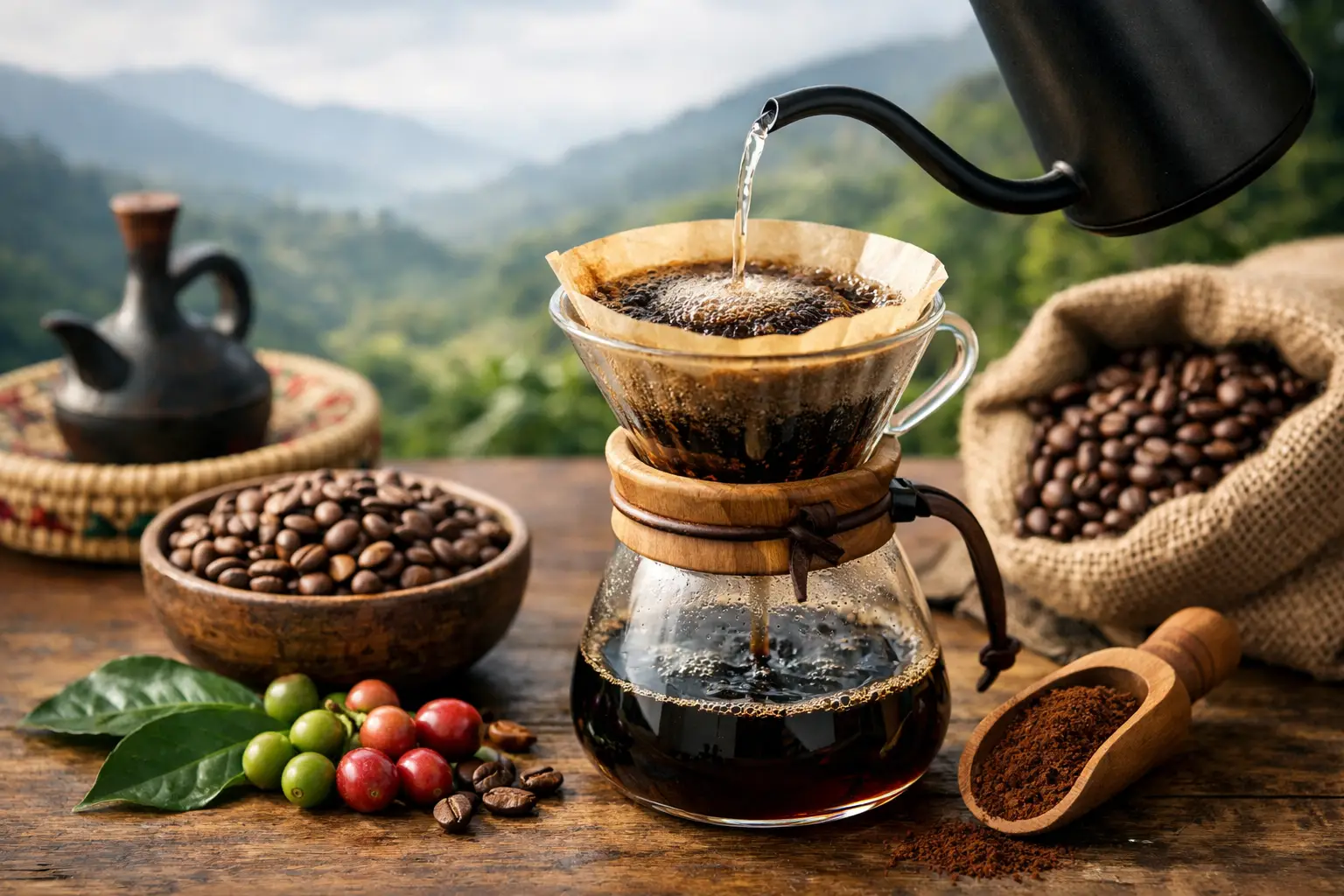
A great Yirgacheffe can smell like jasmine before you even take the first sip. Then the cup opens further – citrus, tea-like clarity, soft sweetness, and a finish that feels polished rather than heavy. That elegance is exactly why so many people ask how to brew yirgacheffe coffee without losing the delicate qualities that make it special.
The short answer is this: treat it gently. Yirgacheffe is not a coffee that rewards brute force brewing, overly dark roasting, or water that runs too hot and too fast. It shines when you build around clarity, balance, and precision. If you enjoy coffee that feels pure, expressive, and naturally vibrant, this origin rewards careful brewing more than almost any other.
Why Yirgacheffe needs a different approach
Yirgacheffe, one of Ethiopia’s most celebrated coffee regions, is prized for high-altitude growing conditions and distinctive flavor complexity. Depending on whether the lot is washed or natural, you may taste florals, bergamot, lemon, peach, honey, or soft berry notes. The body is often lighter than what many people expect from mainstream coffee, but that is part of its appeal. It offers detail rather than weight.
That means your brewing choices matter. A method that works well for a chocolate-forward Brazilian coffee may flatten a Yirgacheffe or push it into sourness. Too fine a grind can make the cup harsh and muddy. Too coarse a grind can leave it thin and underdeveloped. Even your water chemistry can shape whether the cup feels bright and refined or sharp and hollow.
If your goal is to experience the bean’s floral aroma and clean sweetness, the best approach is usually filter brewing. Immersion methods can work beautifully too, but espresso often compresses the most delicate notes unless the coffee has been roasted and dialed in very specifically for that style.
How to brew Yirgacheffe coffee for clarity and aroma
Start with fresh whole beans, ideally rested a few days after roasting but not old. A Yirgacheffe brewed a month or two after roast can still be enjoyable, yet its most expressive aromatics tend to show up when the coffee is relatively fresh. Grind just before brewing to preserve those volatile floral and citrus notes.
Water quality is equally important. Use filtered water if possible. If your tap water tastes hard, metallic, or heavily chlorinated, your coffee will reflect that. Since Yirgacheffe has such a transparent cup profile, flaws in water are harder to hide.
For temperature, aim for 198 to 203 degrees Fahrenheit. If your coffee tastes too tart or underdeveloped, go slightly hotter. If it tastes bitter or loses its floral character, go slightly cooler. There is no single perfect temperature for every Yirgacheffe, because roast level and processing style change the ideal extraction window.
A good starting ratio is 1:16 – for example, 20 grams of coffee to 320 grams of water. This usually gives Yirgacheffe enough strength to feel satisfying without muting its delicacy. If you prefer a softer, tea-like cup, move closer to 1:17. If you want more intensity, try 1:15.5, but avoid making it so concentrated that the cup loses definition.
The best brewing methods for Yirgacheffe
Pour-over
Pour-over is often the clearest way to showcase Yirgacheffe. A V60, Kalita Wave, or similar dripper can highlight the coffee’s floral top notes and bright acidity with beautiful precision. If you want to taste layers rather than just strength, this is usually the best place to start.
Use a medium grind, something like coarse sand. Begin with a bloom using about twice the coffee’s weight in water, then wait 30 to 45 seconds. This helps release trapped gas and prepares the bed for more even extraction. From there, pour in controlled stages, keeping the water flow steady rather than aggressive.
Your total brew time will often land between 2:45 and 3:30 depending on the dripper, filter, and dose. If the cup tastes thin and sour, grind a bit finer or pour more slowly. If it tastes dry, bitter, or muted, grind slightly coarser.
French press
French press gives Yirgacheffe a rounder, fuller body. You may lose some of the sharper floral detail, but in return you gain texture and sweetness. This is a good choice if you like Ethiopian coffee but want a softer, more grounded cup.
Use a coarse grind and a ratio near 1:15 or 1:16. Brew for about four minutes, stir gently, and let the grounds settle before pressing slowly. If you want extra clarity, skim the crust and let the coffee rest another few minutes before plunging. The result can be surprisingly elegant for an immersion brew.
AeroPress
AeroPress sits in a very useful middle ground. It preserves more brightness than French press while offering more body than many pour-over brews. It is also forgiving, which makes it ideal if you are still learning how to brew Yirgacheffe coffee at home.
A medium-fine grind works well here. Try 15 grams of coffee to 240 grams of water at about 200 degrees Fahrenheit, with a total brew time of around two minutes. Adjust from there based on taste. AeroPress can handle both washed and natural Yirgacheffe nicely, especially if you want a cup that feels clean but not fragile.
Dialing in grind size without overthinking it
Grind size is where most home brewers either elevate the cup or quietly ruin it. For Yirgacheffe, the biggest risk is overcorrecting. People taste acidity and assume the coffee is underextracted, then grind much finer and end up with bitterness covering the bean’s floral identity.
A little brightness is normal. In fact, it is often desirable. The question is whether the acidity feels crisp and juicy or sharp and unfinished. If the coffee tastes like lemon peel and weak tea, go finer or extend extraction slightly. If it tastes woody, drying, or too heavy, go coarser.
This is especially true with washed Yirgacheffe, which can present very clean citrus and tea notes that some drinkers mistake for weakness. Natural-processed Yirgacheffe tends to be more fruit-forward and forgiving, though it can become winey or overly fermented if brewed too aggressively.
Small details that make a big difference
Preheating your brewer and cup helps maintain stable temperature, which matters more than many people realize for lighter, higher-grown coffees. Rinsing the paper filter thoroughly also helps remove papery flavors that can interfere with a delicate cup profile.
Agitation is another detail worth watching. Gentle swirling can improve extraction, but too much stirring can muddy the cup and flatten complexity. With Yirgacheffe, restraint usually pays off.
Even serving temperature matters. Do not judge the coffee only when it is piping hot. As it cools, a well-brewed Yirgacheffe often reveals more sweetness, more florals, and greater clarity. Some of its best qualities appear after the first few minutes.
Common mistakes when brewing Yirgacheffe
One common mistake is choosing a roast that is too dark for the origin. Darker roasting can erase the very notes that make Yirgacheffe distinctive, replacing jasmine and citrus with generic roast flavor. That style may still be pleasant, but it will not express the coffee’s true character.
Another mistake is adding sugar too quickly. If you are used to sweetened café drinks, a clean Yirgacheffe may seem lighter at first. Give it a moment. When brewed well, it often has a natural sweetness that does not need much intervention. For those who prefer sweetening, gentler natural options preserve the cup better than heavy processed syrups.
The last mistake is expecting every bag to taste the same. Origin tells you a lot, but processing, harvest, roast, and freshness all shape the result. A washed Yirgacheffe may feel like citrus and black tea, while a natural lot may lean toward ripe fruit and honey. Brewing should respond to the coffee in front of you, not just the name on the bag.
A better cup starts with respect for the bean
Brewing Yirgacheffe well is not about making coffee complicated. It is about removing noise so the cup can speak clearly. Start with clean water, a thoughtful grind, and a method that favors balance over force. Then taste carefully and adjust with intention.
That is where exceptional coffee becomes more than routine. It becomes a small daily ritual of purity, craft, and pleasure – one that rewards patience with every fragrant sip. If you begin there, Yirgacheffe will meet you with remarkable clarity.
