That first sip tells the truth. If your coffee tastes harsh unless you add sugar, the issue is not always your sweetener – it may be the bean, the roast, or the brew itself. Knowing how to sweeten coffee naturally starts with understanding flavor balance, because the cleanest cup is not the sweetest one. It is the one where bitterness, body, acidity, and sweetness are in harmony.
For many coffee drinkers, refined sugar became the default fix for over-roasted beans, stale grounds, or overly strong extraction. But when the coffee is carefully sourced and properly brewed, natural sweetness has room to show itself. Floral Ethiopian coffees, for example, can carry notes of stone fruit, citrus, honey, or tea-like sweetness without needing much added at all. That is a very different experience from masking bitterness with processed syrup.
How to sweeten coffee naturally without losing flavor
The best natural sweetener depends on what kind of cup you want. Some options blend quietly into the coffee and simply soften the edges. Others bring their own flavor and change the profile more noticeably. If you love origin character and drink specialty coffee for its aroma and nuance, that difference matters.
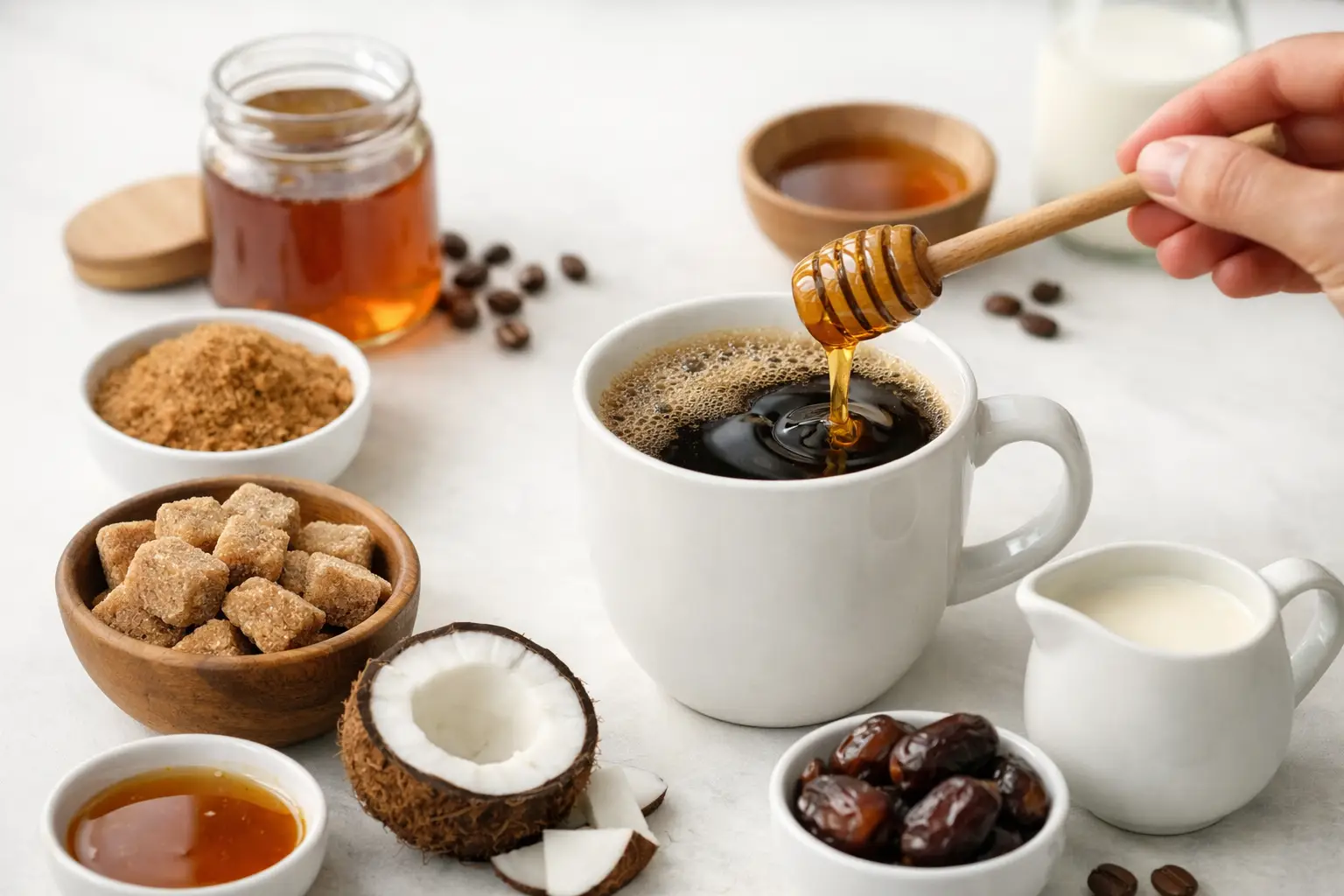
Honey is often the first choice, and for good reason. It dissolves well in hot coffee, adds rounded sweetness, and can feel more elegant than white sugar. A mild honey keeps the cup balanced, while a darker honey adds more personality. The trade-off is that too much can dominate delicate flavor notes, especially in lighter roasts.
Date syrup is another strong option, particularly if you want depth. It gives coffee a caramel-like richness with a fuller texture than sugar or honey. In a milk-based drink, it can taste especially smooth and comforting. In a bright pour-over, though, it may feel too heavy. It depends on whether you want to highlight the bean or create a richer beverage.
Maple syrup can work beautifully in coffee, especially in medium roasts with nutty or chocolate notes. It adds sweetness with a gentle woody warmth that feels natural rather than artificial. The key is restraint. A small amount can round out the cup; too much can push the coffee toward dessert.
For people who prefer little to no added sugar at all, cinnamon offers a different path. It does not make coffee sweet in the same way honey or dates do, but it creates the perception of sweetness through aroma. That can be enough, particularly if you are trying to reduce sugar without making your coffee feel austere. A pinch in the grounds before brewing usually tastes more integrated than stirring it in afterward.
Start with a naturally sweeter coffee
If you are serious about how to sweeten coffee naturally, begin before the sweetener ever touches the cup. Bean quality changes everything.
Specialty-grade coffee often contains natural sweetness that commodity coffee lacks. When beans are handpicked, processed with care, and roasted with precision, the result is cleaner and more expressive. You are more likely to taste cocoa, ripe fruit, or floral sweetness instead of flat bitterness. That built-in sweetness means you need less help from anything else.
Origin matters here. Ethiopian coffees, especially Yirgacheffe profiles, are known for clarity, brightness, and fragrant complexity. Depending on the roast and brew, they can show soft sweetness that feels layered rather than blunt. If you are used to dark, generic blends, this can be a reset for your palate. Coffee starts tasting like an ingredient worth preserving, not correcting.
Roast level also plays a role. Many people assume darker roasts are naturally sweeter because they taste bolder, but darker roasts can also carry more bitterness and smoky character. Medium and light-medium roasts often reveal more of the bean’s true sweetness when brewed well. They may need less added sweetness overall, even if the flavor feels more nuanced at first.
Brew methods that make coffee taste sweeter
Sometimes the answer is not what you add, but how you brew.
Over-extraction is one of the most common reasons coffee tastes bitter. If your grind is too fine, your water is too hot, or your brew runs too long, you pull out harsher compounds that push you toward sugar. A slightly coarser grind or shorter brew time can make the cup smoother and naturally sweeter.
Water quality matters more than many people realize. Minerals affect extraction, and poor-tasting water produces poor-tasting coffee. If your coffee tastes dull or sharp no matter what bean you use, filtered water can make a noticeable difference.
Milk changes the equation too. Steamed milk, oat milk, and some almond milks all bring their own natural sweetness. In a cappuccino or latte, that may be enough to make extra sweetener unnecessary. Oat milk in particular tends to soften coffee and create a gentle sweet impression, though it can mute brighter origin notes in more delicate beans.
Cold brew is another useful option for people trying to cut back on sugar. Because it extracts differently, it usually tastes smoother and less bitter than hot brewed coffee. That lower perceived bitterness often means you need less sweetener. If you enjoy an iced coffee but want to avoid syrup-heavy café drinks, cold brew with a touch of honey or date syrup can feel much cleaner.
The best natural sweeteners for different coffee styles
Not every sweetener belongs in every cup. A bright pour-over, a flat white, and a cold brew each respond differently.
In black coffee, especially pour-over or French press, subtlety matters. Honey in a very small amount can work, but cinnamon or no-calorie natural options like monk fruit may preserve more of the coffee’s structure. Monk fruit has a place for people avoiding sugar entirely, though the taste can vary by brand and some blends include other additives. It is worth reading the label carefully.
In espresso drinks, date syrup and honey tend to perform well because espresso has enough concentration to stand up to them. A medium roast espresso with milk and a touch of date syrup can taste rounded, deep, and naturally indulgent without becoming cloying.
In iced coffee and cold brew, maple syrup often shines because it blends more easily than granulated sweeteners and adds a smooth sweetness without the artificial finish of many flavored syrups. Just make sure the coffee itself is still present. The goal is balance, not disguise.
A cleaner way to adjust your palate
If you currently take two spoons of sugar in every cup, switching overnight to unsweetened coffee may feel punishing. A better approach is gradual.
Start by reducing your usual sweetness slightly and improving the coffee itself at the same time. Use fresher beans. Brew more carefully. Try a naturally expressive origin. Then replace refined sugar with a small amount of honey, date syrup, or cinnamon depending on your preference. Over time, your palate adjusts. What once tasted plain begins to taste layered.
This shift matters because sweetness in coffee should not erase character. A premium cup has texture, aroma, brightness, and finish. When sweetening becomes excessive, all of that disappears. You are left with a generic sweet drink that happens to contain caffeine.
For health-conscious coffee drinkers, there is also a difference between reducing refined sugar and simply replacing it carelessly. Natural does not always mean light, and some sweeteners are still best used in moderation. The point is not to chase sweetness under a healthier label. It is to choose ingredients with more integrity and use them with intention.
At Yirga, that philosophy shapes the cup from the start – organic beans, careful roasting, and a no-refined-sugar approach that treats sweetness as part of the coffee experience, not a cover for poor quality.
What natural sweetness should taste like
Natural sweetness in coffee is rarely loud. It is softer, cleaner, and more integrated than the sharp hit of white sugar. You may notice honeyed florals, ripe fruit, cocoa, or a rounded finish that lingers gently rather than coating the palate.
That is why the best answer to how to sweeten coffee naturally is not just a pantry suggestion. It is a quality standard. Choose better beans, brew with more care, and add sweetness only when it truly improves the cup. When coffee is treated with respect, you need less to make it beautiful.
The most satisfying cup is often the one that tastes the least manipulated – just balanced enough to let the coffee speak clearly.
