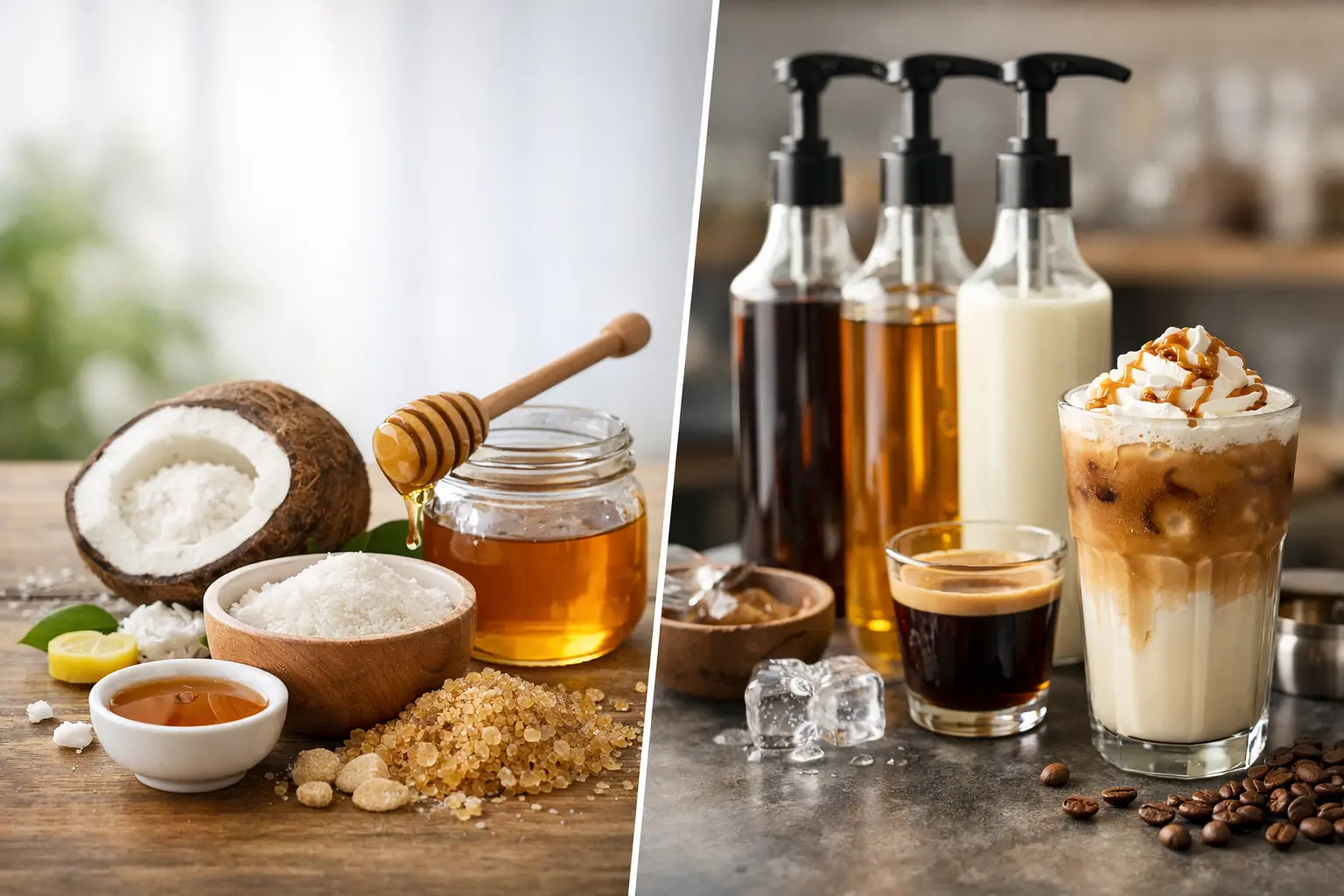
That vanilla latte may look polished, but the real choice starts long before the first sip. When people compare natural sweeteners vs coffee syrups, they are usually asking a deeper question: do you want coffee to be enhanced, or covered up?
For anyone who values clean ingredients and a more honest cup, that distinction matters. Sweetness can round out acidity, soften bitterness, and make coffee more approachable. But the way you sweeten your drink changes not only flavor, but also texture, ingredient quality, and how much of the bean itself you can still taste.
Natural sweeteners vs coffee syrups: what sets them apart?
Natural sweeteners are usually simpler ingredients used in small amounts to complement coffee rather than dominate it. Depending on the drink, that might mean raw honey, date syrup, maple syrup, coconut sugar, or a touch of organic cane sugar if your standards allow it. In a wellness-focused coffee setting, the goal is usually clarity – sweetness that feels gentle and recognizable.
Coffee syrups are a different category. They are typically formulated products designed for consistency, shelf life, and strong flavor impact. Many include refined sugar, artificial flavors, preservatives, stabilizers, and coloring. Even when a syrup is labeled with a familiar flavor like hazelnut or caramel, the result often tastes more like a sweet beverage concept than coffee.
That does not mean syrups are always bad or that natural sweeteners are always better in every setting. If someone wants a dessert-like iced latte with bold flavor, syrup delivers that quickly. But if the coffee itself is high quality – especially a clean, floral, fruit-forward coffee with origin character – heavy syrup can flatten what makes it special.
The flavor question most people miss
A premium coffee already contains natural sweetness. Ethiopian coffees, for example, can carry notes of jasmine, citrus, berries, stone fruit, or soft cocoa depending on the roast and brew method. Those delicate characteristics do not need much help. In fact, they often need restraint.
Natural sweeteners tend to work with these qualities rather than sit on top of them. A little honey can add warmth and body. Date syrup can bring rounded sweetness with a deeper, almost caramel-like edge. Maple syrup can add softness without turning the cup into candy. Used carefully, these choices let the aroma stay alive.
Syrups are more forceful. They usually add a preset flavor profile that overrides nuance. Vanilla syrup does not just sweeten – it announces itself. Caramel syrup pushes the drink toward richness, often regardless of whether the coffee underneath is bright, floral, chocolatey, or nutty. That can be satisfying, but it is a very different experience from tasting the bean.
This is where quality coffee changes the conversation. The better the coffee, the less you want to mask it.
Ingredient integrity and what ends up in your cup
For health-conscious coffee drinkers, natural sweeteners vs coffee syrups is not only about taste. It is also about trust.
A natural sweetener is often easy to understand because the ingredient list is short, and sometimes it is just one ingredient. Honey is honey. Pure date syrup is dates. Maple syrup is sap reduced into sweetness. There is little mystery there.
Many commercial syrups are more complicated. Refined sugar is usually the base, but it may be joined by artificial flavors, preservatives, gums, acidity regulators, or thickeners. Some sugar-free options rely on high-intensity sweeteners that can leave a noticeable aftertaste. If your idea of premium coffee includes purity and ingredient transparency, that gap is hard to ignore.
There is also the matter of how sweetness feels in the body. People respond differently, and no café should pretend there is one answer for everyone. Still, many customers who actively avoid refined sugar find that simpler sweetening choices align better with their everyday habits. They are not looking for coffee that tastes like a milkshake at 8 a.m. They want something balanced, clean, and enjoyable enough to return to daily.
Texture, balance, and why milk drinks complicate things
Milk changes the equation. In a black coffee, even a small amount of sweetener is obvious. In a latte or flat white, sweetness blends into the milk and can seem softer than it really is. This is why syrup-heavy milk drinks can become much sweeter than expected.
Natural sweeteners can behave beautifully in milk, but they need attention. Honey brings silkiness but can easily become too prominent if overused. Date syrup adds depth that works especially well with espresso and darker roast profiles, though too much can feel dense. Coconut sugar offers a toasted sweetness, but it does not dissolve as smoothly in every preparation.
Syrups win on convenience. They are easy to pump, easy to standardize, and easy to repeat across hundreds of drinks. From an operations point of view, that is useful. From a sensory point of view, it often comes at the cost of subtlety.
For cafés that care about craftsmanship, this is a meaningful trade-off. Precision should not only apply to dose, grind, and extraction. It should also apply to what gets added afterward.
When natural sweeteners make the most sense
If you drink pour-over, Americano, batch brew, or espresso-based drinks made from high-quality beans, natural sweeteners usually make the most sense when your aim is to preserve character. They are especially effective when used sparingly and intentionally.
A floral, washed Ethiopian coffee might need no sweetener at all once brewed properly. But if you prefer a softer cup, a small amount of honey can round the edges without dulling the aromatics. A chocolate-toned espresso may pair well with date syrup in a milk drink where you want sweetness with more depth and less sharpness than refined sugar often brings.
This approach fits people who see coffee as both pleasure and ritual. You still get comfort, but not at the expense of authenticity.
When coffee syrups appeal – and the trade-off
To be fair, syrups have a clear audience. They create familiar café flavors quickly. If someone wants a consistent iced caramel latte every time, syrup provides that experience with very little guesswork. It can also make coffee more approachable for people who are still developing their palate.
The trade-off is that the drink becomes syrup-led rather than coffee-led. That may be fine if the coffee is simply a base for flavor. It is less appealing if the bean was carefully sourced, roasted, and brewed to express origin.
There is also a difference between occasional indulgence and daily habit. A syrup-heavy drink once in a while is one thing. Building your everyday coffee around processed sweetness is another. Many people eventually notice that once their palate adjusts to cleaner sweetness, overly flavored drinks start to taste crowded.
How to choose the right sweetening style for your coffee
The easiest way to decide is to start with your goal. If your priority is dessert-like flavor, syrup may deliver exactly what you want. If your priority is ingredient integrity, balance, and tasting more of the coffee itself, natural sweeteners are usually the better fit.
It also helps to match the sweetener to the coffee rather than choosing one default for everything. Bright, fruit-forward coffees often need less sweetness. Nutty or cocoa-toned coffees can handle richer natural sweeteners. Espresso drinks with milk may need a sweeter profile than black coffee, but not necessarily a flavored syrup.
A good café will guide that choice rather than push the same formula into every cup. That is part of what separates a crafted coffee experience from a standardized one.
A cleaner cup can still feel indulgent
There is a common myth that wellness-focused coffee has to taste restrained or overly serious. It does not. A clean cup can still feel luxurious. In fact, when the bean quality is exceptional, you need less intervention to create something memorable.
That is where thoughtful sweetening becomes part of craftsmanship. The point is not to remove pleasure. It is to refine it. At Yirga Specialty Coffee, that philosophy is simple: let coffee taste like coffee, then sweeten with care.
The best cup is not the sweetest one. It is the one where every element feels intentional, and nothing louder than it needs to be.
