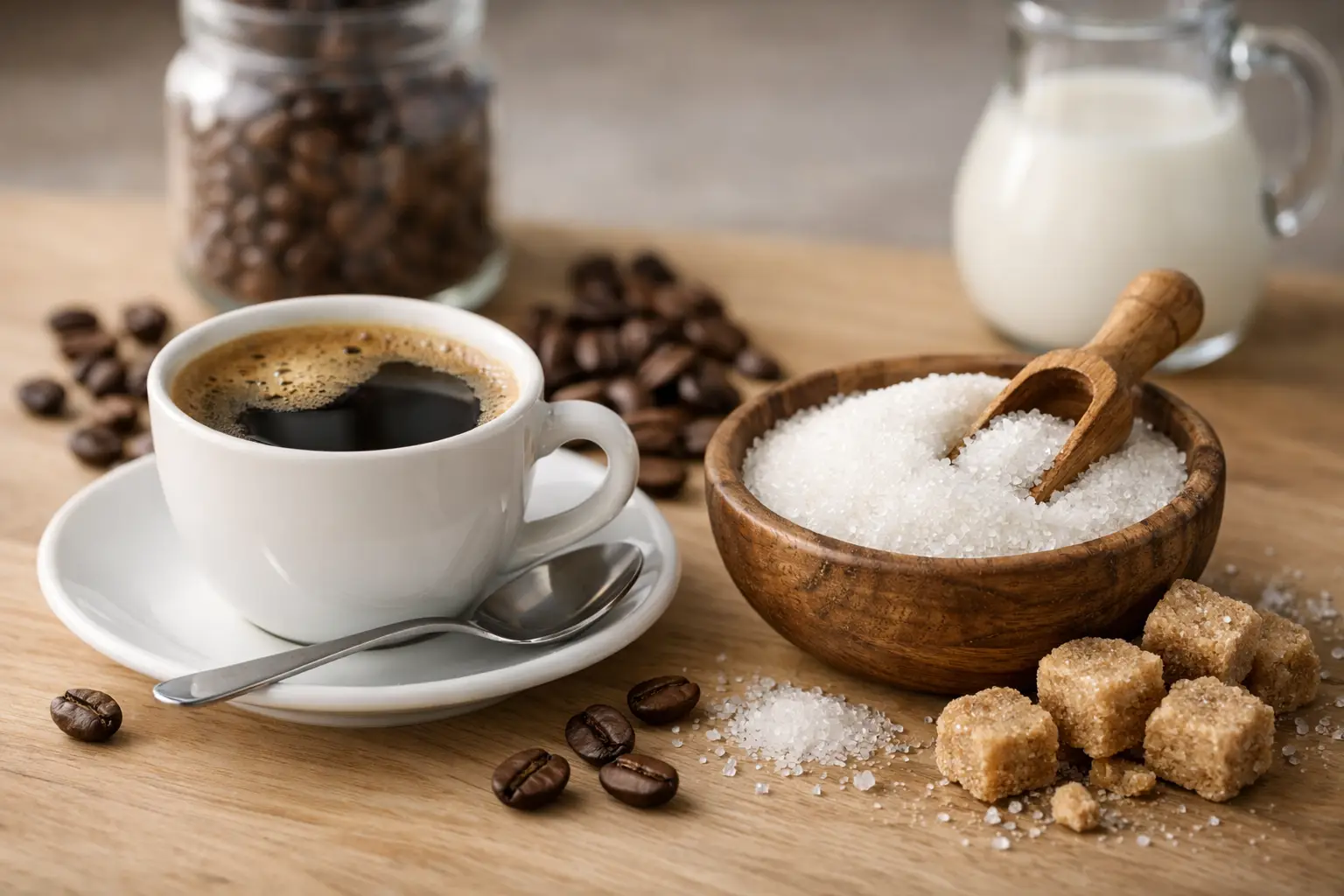
A cup of coffee that tastes flat, bitter, or harsh often gets an automatic fix – a spoonful of white sugar. But does coffee need refined sugar, or has sugar simply become a shortcut for covering what the coffee lacks?
For people who care about both flavor and wellness, that question matters. Specialty coffee invites a different standard. When beans are carefully grown, properly roasted, and brewed with attention, coffee can carry its own sweetness – subtle, natural, and far more interesting than the one-note taste of refined sugar. The real answer is not a strict yes or no. It depends on the coffee in the cup, your palate, and what kind of drinking experience you want.
Does coffee need refined sugar if the coffee is good?
In most cases, no. High-quality coffee does not need refined sugar to become enjoyable. A well-produced cup often contains natural sweetness on its own, especially when the beans come from high-altitude farms, are freshly roasted, and are brewed with balance in mind.
That sweetness does not taste like candy. It can show up as notes of ripe berry, stone fruit, honey, cocoa, or caramelized sugar. Ethiopian coffees are especially known for this kind of elegance. A refined Yirgacheffe, for example, may offer floral aromatics and bright citrus with a tea-like finish, while still carrying a gentle sweetness that makes added sugar feel unnecessary.
This is one of the biggest differences between commodity coffee and specialty coffee. Lower-grade coffee is often roasted dark to hide inconsistencies, which can push bitterness forward. Refined sugar then becomes a mask. Better coffee asks for a lighter hand. Instead of burying the cup, it rewards attention.
Why refined sugar became part of coffee culture
Coffee and sugar have been paired for generations, and not without reason. Many people first encounter coffee through heavily sweetened drinks, diner coffee, or dark roasted blends that lean bitter. In those settings, sugar does more than sweeten. It softens sharp edges and makes the drink feel familiar.
There is also habit. If someone has added sugar to coffee every morning for years, the absence of it can feel like something is missing, even when the coffee itself is flavorful. That does not mean the coffee needs refined sugar in an objective sense. It means the palate has learned to expect a certain profile.
This is where many coffee drinkers get surprised. Once they move to cleaner, higher-quality beans, they often find that what they thought they loved was not sugar itself, but balance. When bitterness drops and natural sweetness becomes visible, the need for refined sugar often fades on its own.
What refined sugar changes in the cup
Refined sugar is effective, but it is blunt. It raises sweetness quickly and predictably, yet it also flattens nuance. Delicate floral notes, fruit acidity, and layered aromatics can become harder to notice when the cup is dominated by a sweetener that tastes the same every time.
That trade-off matters more with premium coffee. If a coffee has been hand-selected, roasted with precision, and brewed to highlight origin character, covering it with refined sugar can erase part of what makes it special. It is a little like adding extra salt before tasting a thoughtfully prepared dish.
There is also the wellness side of the conversation. Many people are reducing refined sugar for broader lifestyle reasons – steadier energy, cleaner eating habits, or less reliance on highly processed ingredients. Coffee can either support that intention or work against it, depending on what goes into the cup.
When sugar is understandable
None of this means adding sugar is wrong. Taste is personal, and coffee should still be pleasurable. If someone is easing into black coffee, a lightly sweetened cup may be a reasonable bridge. The same is true for certain espresso drinks, where bitterness and intensity are naturally more concentrated.
Some brewing mistakes also create a cup that feels harder than it should. Water that is too hot, grounds that are too fine, stale beans, or over-extraction can all produce bitterness. In that case, sugar may feel necessary, but the real issue is technique, not the nature of coffee itself.
There are also coffees intentionally built for milk-heavy beverages. In those drinks, a touch of sweetness can create a familiar, comforting profile. The key difference is whether sugar is enhancing a cup you already enjoy or rescuing one you would not want to drink otherwise.
Natural sweetness in coffee is real
Coffee sweetness is often misunderstood because people expect sweetness to be obvious. In fine coffee, it is usually integrated rather than loud. You taste it in the softness of the finish, the rounded body, and the absence of harshness.
Several factors shape this. Origin matters. Ethiopian coffees, especially those grown at high elevation, can develop vivid fruit character and floral complexity that read as sweet even without additives. Processing matters too. Natural and honey-processed coffees often present more overt fruit sweetness than washed coffees, though washed lots can feel exceptionally clean and elegant.
Roasting has a major role as well. A thoughtful roast preserves the bean’s character instead of burning it away. Brewing completes the picture. A balanced extraction can reveal sweetness that a rushed or uneven brew leaves hidden.
Better ways to make coffee taste sweeter without refined sugar
If your goal is a sweeter cup without refined sugar, start with the coffee itself. Fresh, specialty-grade beans make the biggest difference. Choose coffees known for fruit, chocolate, or honey-like notes rather than blends designed only for strength.
Then look at your brew method. A pour-over can highlight clarity and floral sweetness. A French press can bring out body and cocoa notes. Espresso delivers intensity, but it requires precision. Even small adjustments – grind size, brew ratio, water temperature, and brew time – can shift a coffee from bitter to balanced.
Milk can also change perception. Steamed milk adds natural lactose sweetness, which is why a well-made latte often tastes sweeter than black coffee without needing much else. If you prefer a sweetened cup, natural options such as date syrup, honey, or a small amount of maple syrup can feel more aligned with a cleaner ingredient philosophy, though each one changes flavor in its own way.
That said, not every natural sweetener is automatically better for every cup. Honey can be beautiful in some coffees and distracting in others. Date syrup adds depth, but it can also dominate lighter, more delicate profiles. The best approach is restraint. You want to support the coffee, not bury it.
Does coffee need refined sugar for energy or comfort?
This is where coffee gets confused with dessert. Coffee itself is already functional for many people – valued for focus, ritual, and pleasure. Refined sugar may add an immediate sense of comfort, but that does not mean it is essential to the experience.
In fact, many people find that once they stop heavily sweetening coffee, their palate becomes more sensitive and their preferences shift. They begin noticing the difference between a bright natural Ethiopian and a deeper chocolate-toned blend. They appreciate aroma more. They drink more slowly. The cup starts to feel crafted rather than corrected.
That shift is especially meaningful for anyone building a more intentional wellness routine. A cleaner coffee ritual can still feel luxurious. It does not have to feel restrictive or austere. Often, it is the opposite. It feels more honest.
A more refined answer to the question
So, does coffee need refined sugar? Not inherently. Poor coffee often seems to need it. Well-sourced, carefully roasted, properly brewed coffee usually does not.
The better question is what you want from your cup. If you want sweetness that is immediate and familiar, refined sugar will give it to you. If you want to taste origin, craftsmanship, and the bean’s natural character, sugar is often the first thing to reduce. There is room for preference here, but there is also a clear truth: exceptional coffee is capable of far more sweetness than most people have been taught to expect.
A great cup should not ask to be covered up. It should invite you to taste more closely, slow down, and discover that purity can be deeply satisfying on its own.
