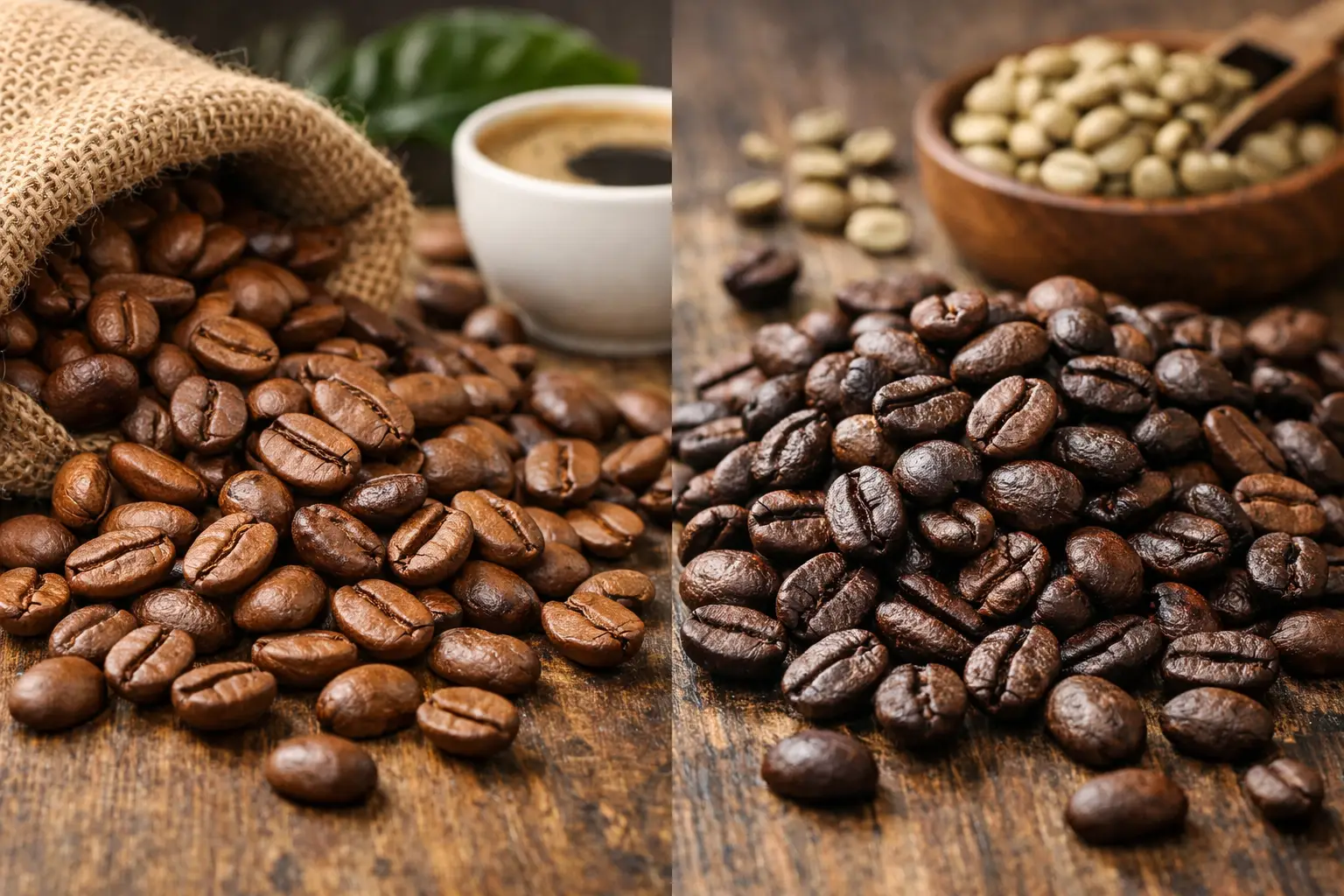
The difference between arabica vs robusta coffee becomes obvious the moment you taste them side by side. One leans layered, fragrant, and refined. The other is bolder, heavier, and more direct. Neither is automatically better in every cup – the real question is what you value most: complexity, strength, crema, caffeine, or balance.
For coffee drinkers who care about purity and quality, this comparison matters. Bean choice shapes aroma, mouthfeel, acidity, roast behavior, and even how your coffee feels during the day. If you prefer clean flavors and origin character, you may naturally lean one way. If you want intensity and body, you may lean another.
Arabica vs Robusta Coffee at a Glance
Arabica and robusta are two different coffee species, and they behave very differently from farm to cup. Arabica is generally associated with sweeter, more nuanced flavor, often carrying notes of fruit, florals, chocolate, or soft citrus depending on origin and roast. Robusta tends to present a stronger, earthier profile with more bitterness, lower acidity, and a thicker, weightier body.
That broad distinction is helpful, but it is not the whole story. A well-grown, carefully roasted robusta can be far cleaner and more elegant than people expect. At the same time, not every arabica is exceptional simply because of its name. Variety matters, but sourcing, processing, altitude, and roasting matter just as much.
Flavor Differences: Why Arabica Tastes Softer and Robusta Tastes Stronger
Arabica usually wins attention for aroma. It often opens with a more expressive fragrance and a wider range of flavor notes in the cup. Depending on the origin, you might notice jasmine, stone fruit, berries, caramel, cocoa, or tea-like delicacy. This is one reason arabica dominates the specialty space. It gives roasters and brewers more room to highlight origin character.
Robusta is built differently in taste. It is more likely to show dark chocolate, toasted grain, nuts, wood, spice, or a slightly smoky bitterness. In some cups, that bitterness can feel too aggressive. In others, especially when used thoughtfully in blends, it adds welcome structure and depth.
This is where preference becomes personal. If you enjoy espresso with a rich crema and a more forceful finish, robusta may appeal to you more than coffee culture often admits. If you drink pour-over, filter coffee, or lightly sweetened milk drinks and want the bean itself to remain clear and expressive, arabica usually offers more elegance.
Caffeine Content and How It Changes the Cup
One of the most practical differences in arabica vs robusta coffee is caffeine. Robusta generally contains significantly more caffeine than arabica. That extra caffeine contributes not only to its stronger effect, but also to its naturally more bitter taste.
For some people, this is a clear advantage. A higher-caffeine coffee can feel more energizing, especially in the morning or before a long workday. It can also stand up well in milk-based drinks where subtle flavors may get muted.
For others, lower caffeine is a better fit. Arabica often feels gentler, especially for drinkers who are sensitive to intensity or who want a cup they can savor without harshness. Wellness-minded coffee drinkers often look beyond caffeine alone and focus on how clean and balanced the coffee feels overall.
Growing Conditions: Altitude, Hardiness, and Quality Potential
Arabica is more delicate to grow. It typically thrives at higher elevations and in more stable conditions, where slower maturation can help develop sweetness and complexity. This is one reason high-altitude arabica from respected origins earns so much attention. The environment supports more refined cup character.
Robusta is hardier. It tolerates heat, lower elevations, and more challenging agricultural conditions better than arabica. It is also naturally more resistant to pests. From a farming perspective, that resilience makes it important. From a cup perspective, it explains why robusta has long been used in commercial coffee production where yield and durability matter.
Still, the old assumption that robusta is only a lower-tier bean is becoming less accurate. Fine robusta is gaining more respect as producers improve cultivation and post-harvest practices. Quality is no longer defined by species alone.
Texture, Crema, and Espresso Performance
If your favorite drink is espresso, the choice between these beans becomes even more interesting. Arabica can produce a beautifully aromatic espresso with sweetness, acidity, and a silky finish. It often feels more transparent, meaning you can taste the origin and roast style more clearly.
Robusta brings body and crema. It helps build that dense golden layer many espresso drinkers associate with intensity and richness. In blends, even a modest percentage of robusta can deepen texture and create a fuller, more persistent finish.
This is why many espresso blends use both. Arabica contributes fragrance and complexity. Robusta adds weight and structure. A thoughtful blend can create a cup that feels complete rather than extreme in either direction.
Which Bean Is Better for Different Brewing Methods?
Brew method changes the conversation. Arabica tends to shine in filter coffee, pour-over, Chemex, and other brewing styles that highlight clarity and aroma. These methods allow delicate notes to come forward, especially when the beans are fresh and properly ground.
Robusta is often more comfortable in moka pot, strong drip preparations, and espresso blends where concentration and body matter more than delicacy. It can also perform well in iced coffee drinks because its strength carries through dilution.
French press can go either way. Arabica gives a rounder, more aromatic cup. Robusta creates a denser, more assertive brew. A blend often lands in the sweet spot.
So if you are choosing beans for home brewing, think beyond labels. Ask what kind of cup you want in the morning, how you brew it, and whether you drink it black or with milk.
Arabica vs Robusta Coffee for Health-Conscious Drinkers
Health-conscious coffee drinkers often assume arabica is the obvious choice, but the answer depends on what “healthy” means to you. If you define it as cleaner flavor, less bitterness, and a cup that needs little or no sweetening, arabica often fits naturally. Its sweetness and acidity can make coffee feel complete on its own.
If you define it as stronger stimulation and a more concentrated coffee experience, robusta may be the better fit. Its higher caffeine and fuller body can deliver more impact in a smaller serving.
The larger point is that bean quality matters more than marketing language. Organic cultivation, careful roasting, and freedom from unnecessary additives have a bigger effect on the purity of your coffee experience than species alone. A well-sourced coffee, whether arabica, robusta, or a blend, should taste intentional rather than masked.
Should You Choose Arabica, Robusta, or a Blend?
Choose arabica if you want elegance, aroma, and origin character. It is often the right choice for black coffee drinkers, pour-over fans, and anyone who values subtle flavor shifts from one crop or region to another.
Choose robusta if you want strength, crema, body, and more caffeine. It suits drinkers who enjoy a bolder espresso or need a coffee that holds its shape in milk-based drinks.
Choose a blend if you want balance. This is often the smartest option for people who enjoy espresso at home and want both sweetness and structure in the same cup. Many coffee drinkers are not looking for a pure expression of one species. They are looking for a cup that tastes complete.
At Yirga Specialty Coffee, that balance between craftsmanship and purity is what makes bean selection meaningful. The best coffee is not defined by trend or assumption. It is defined by whether the cup in front of you tastes honest, clean, and deeply satisfying.
The Real Answer to Arabica vs Robusta Coffee
Arabica is not automatically superior, and robusta is not automatically harsh. Those ideas are easy shortcuts, but they miss the point. Great coffee starts with farming, picking, processing, roasting, and brewing with care. Species shapes the profile, but quality decisions shape the result.
If you are building a coffee ritual around flavor clarity and sensory depth, start with arabica. If you want power, body, and crema, explore robusta with an open mind. If you want harmony, a well-crafted blend may give you more pleasure than either extreme.
The best way to decide is simple: taste with attention. Your ideal cup should not just wake you up. It should feel pure, intentional, and worth returning to tomorrow morning.
