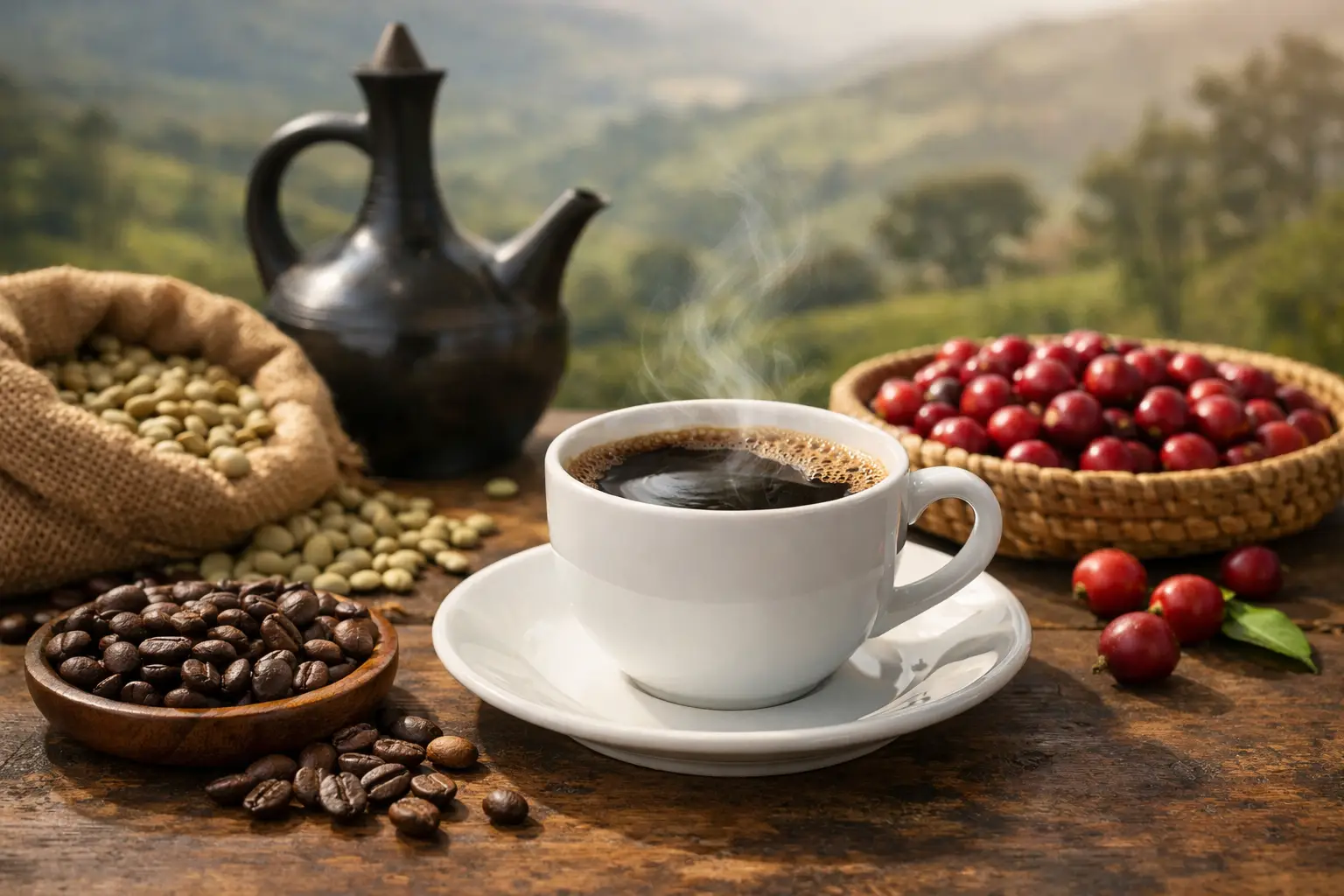
A great Yirgacheffe announces itself before the first sip. The aroma rises quickly – jasmine, citrus peel, soft stone fruit, sometimes a tea-like sweetness that feels almost weightless. In this Ethiopian Yirgacheffe coffee review, that first impression matters because it tells you exactly why this origin has earned such a devoted following among specialty coffee drinkers.
Yirgacheffe is not a coffee for people who want heaviness at any cost. It is prized for clarity, fragrance, and elegance. When the sourcing is careful and the roast is handled with restraint, the cup can feel vivid yet clean, layered yet effortless. That balance is what makes Yirgacheffe one of the most respected expressions of Ethiopian coffee heritage.
What makes Ethiopian Yirgacheffe stand out
Yirgacheffe comes from a high-altitude growing region in southern Ethiopia, where elevation, climate, and traditional cultivation methods shape a distinct cup profile. This is often where coffee drinkers encounter some of the most expressive floral and citrus notes in the world of Arabica.
The appeal is not just complexity for its own sake. The best lots carry a natural sense of purity. You taste brightness, but it is not sharp. You notice sweetness, but it is not syrupy. Even the finish tends to feel polished and refined rather than dense or muddy. For drinkers who care about ingredient integrity and a cleaner coffee experience, that matters.
Processing also plays a major role. Washed Yirgacheffe is known for precision – floral aromatics, lemon-like acidity, and a tea-like body. Natural processed Yirgacheffe can lean more fruit-forward, with berry tones, fuller sweetness, and a slightly softer structure. Neither is automatically better. It depends on whether you value sparkling definition or richer fruit expression in the cup.
Ethiopian Yirgacheffe coffee review: flavor, body, and finish
At its best, Yirgacheffe opens with a fragrant nose that feels lifted and elegant. Jasmine is the note many people mention first, and for good reason. It is often joined by bergamot, lemon zest, peach, apricot, or honey. Some cups show a delicate herbal edge, almost like black tea or chamomile, which adds sophistication rather than distraction.
The acidity is one of its defining traits. In lower-quality coffee, acidity can read as harsh or thin. In a strong Yirgacheffe, it feels bright and structured, giving the coffee energy without taking away sweetness. That brightness is a large part of what makes the cup feel fresh and alive.
Body is usually light to medium-light. This is where expectations matter. If you prefer the dense weight of darker roasts or classic chocolate-heavy espresso profiles, Yirgacheffe may feel too delicate. But if you appreciate transparency and flavor separation, the lighter body becomes a strength. It allows each note to appear clearly instead of blending into a generic roast taste.
The finish is often one of the most memorable parts. A well-roasted Yirgacheffe leaves behind floral sweetness and citrus lift, sometimes with a silky tea-like echo. It does not linger as bitterness. It lingers as fragrance.
Roast level matters more than many people think
Yirgacheffe is most compelling when the roast protects the character of the bean rather than covering it. Light to medium roasts usually bring out the origin best. You get the aromatics, the crisp fruit, and the clean finish that define the region.
A roast that goes too dark can flatten those details. Floral notes fade first, then the citrus becomes muted, and the cup shifts toward roast-driven bitterness. Some drinkers prefer that style, especially in milk drinks, but it moves the coffee away from what makes Yirgacheffe distinctive in the first place.
That does not mean every light roast is automatically excellent. Underdeveloped roasting can leave the coffee tasting grassy, sour, or incomplete. The sweet spot is a roast with enough development to create sweetness and balance, but not so much that the origin disappears. This is where craftsmanship shows.
How it performs across brewing methods
Yirgacheffe is especially rewarding in pour-over. Methods like V60 and Chemex tend to highlight the cup’s floral top notes and citrus clarity. If your goal is to taste origin with minimal interference, this is often the best place to start.
In a French press, the coffee can feel rounder and a little less precise. You may gain texture, but lose some of the sparkling separation that makes Yirgacheffe so attractive. It can still be enjoyable, especially with a natural processed lot, though it usually feels less refined than a filtered brew.
As espresso, Yirgacheffe can be beautiful but less forgiving. The acidity becomes more concentrated, and if the extraction is off, the shot can tilt too sharp. When dialed in well, though, it delivers an aromatic, fruit-toned espresso with unusual brightness and a clean, elegant finish. It is an excellent choice for drinkers who want espresso with character rather than sheer intensity.
Milk changes the equation. Yirgacheffe does not always push through milk the way a chocolatey Brazilian or a deeper roasted blend might. In smaller milk drinks, it can still bring a lovely floral sweetness. In larger lattes, some of its nuance may disappear. If you enjoy coffee for delicacy and aroma, black preparations will show it more honestly.
Who will love it – and who may not
This is a coffee for drinkers who pay attention. If you enjoy noticing aroma before flavor, if you prefer a clean cup over a heavy one, and if you want sweetness that feels natural rather than processed, Yirgacheffe is easy to appreciate.
It is also a strong match for wellness-minded coffee drinkers. Because the cup is naturally expressive, it does not need flavored syrups or excessive sweetening to feel complete. Its appeal comes from the bean itself – careful cultivation, high-altitude growth, and roasting that respects rather than masks the source.
Still, it is not universal. Some people want coffee to feel bold, dark, and deeply roasty. Others prefer nutty, cocoa-rich profiles with low acidity. For those drinkers, Yirgacheffe may seem too bright or too soft-bodied. That is not a flaw. It simply means this coffee rewards a different palate.
Buying tips for a better Ethiopian Yirgacheffe coffee review experience
Not every bag labeled Yirgacheffe will deliver the same quality. Freshness matters, but so do transparency and roast discipline. Look for information on processing method, roast style, and tasting notes that sound specific rather than generic. “Floral” and “citrus” are common descriptors, but the best roasters usually tell a more complete story about the cup.
Organic sourcing can be especially meaningful here when paired with careful handling and a clean roast profile. For many discerning coffee buyers, the appeal of Yirgacheffe is tied not only to flavor but to purity – coffee that tastes alive without needing artificial enhancement.
If you are buying for home brewing, grind size also deserves attention. A tailored grind makes a real difference in extraction, especially with lighter roasted Ethiopian coffees. Too fine, and you lose elegance to bitterness or over-concentration. Too coarse, and the cup turns thin and undeveloped.
Ethiopian Yirgacheffe coffee review: is it worth it?
For many specialty coffee drinkers, yes – absolutely. Yirgacheffe offers something that cheaper, more generic coffees rarely achieve: unmistakable identity. It does not taste interchangeable. It tastes like a place, a climate, and a tradition.
That said, value depends on what you want from your cup. If your goal is comfort, body, and roast depth, there may be better fits. If your goal is aromatic clarity, natural sweetness, and a more elevated expression of coffee, Yirgacheffe more than justifies its reputation.
At Yirga Specialty Coffee, this is exactly why Ethiopian coffee continues to deserve a place in a more thoughtful, health-conscious routine. When coffee is this carefully grown, roasted, and brewed, you do not need to dress it up. The cup already carries enough beauty on its own.
The best way to judge Yirgacheffe is to slow down long enough to notice what it is doing. Let the aroma arrive first, let the acidity speak clearly, and let the finish settle. Some coffees are built for force. This one is built for grace.
