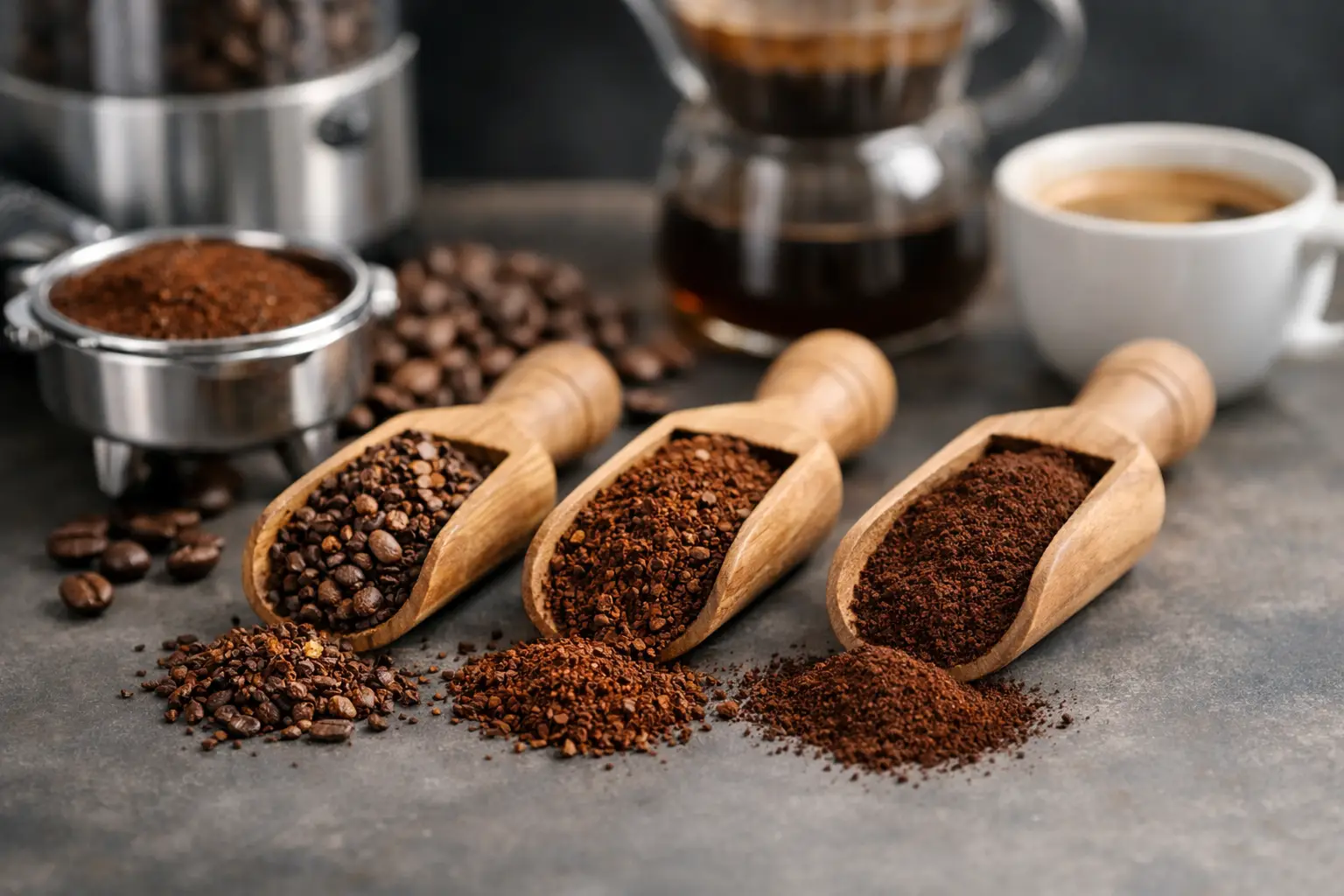
A beautiful coffee can taste flat, sharp, or strangely hollow for one simple reason: the grind was wrong for the brew. Custom coffee grind size is not a minor detail for enthusiasts. It is one of the clearest ways to protect the character of a bean, preserve its sweetness, and bring more balance to the cup.
For anyone who buys carefully sourced coffee, this matters. When beans are organic, high-grown, and roasted with precision, the goal is not just to make coffee strong enough. The goal is to reveal what is already there – florals, citrus, cocoa, stone fruit, gentle spice, or a clean tea-like finish. Grind size decides how much of that potential actually reaches your cup.
Why custom coffee grind size matters
Coffee brewing is an extraction process. Water moves through ground coffee and dissolves acids, sugars, oils, and aromatic compounds. If the grounds are too coarse, the water passes through too quickly and leaves behind sweetness and depth. If the grounds are too fine, the water lingers too long and pulls out bitterness, heaviness, and dryness.
This is why one coffee can taste vibrant in a pour-over, rounded in a French press, and intense in espresso – even when the bean is exactly the same. The grind changes the contact between water and coffee. A thoughtful grind gives you a cup that tastes intentional rather than accidental.
There is also a freshness advantage. Whole beans hold their aromatic compounds far better than pre-ground coffee. But once you grind them, size becomes your next quality decision. A custom approach lets you match the bean to your brewer instead of forcing every coffee into the same generic texture.
The real effect on flavor, body, and clarity
When people talk about grind size, they often focus only on strength. In reality, the impact is wider than that.
A finer grind usually increases extraction. That can create a fuller body and stronger flavor, but it can also mute delicate notes if you go too far. A coarse grind often produces more clarity and a lighter mouthfeel, though too coarse can make the cup taste thin or sour.
The best grind size is the one that allows the coffee’s natural structure to show itself. An Ethiopian coffee with floral aromatics and bright citrus may benefit from a grind that encourages clarity and elegance. A deeper, more chocolate-forward blend may welcome a slightly different approach, especially if the drinker prefers more body. Neither is universally correct. The right answer depends on the bean, the roast, the brewing method, and what kind of cup you want.
Custom coffee grind size by brew method
Different brewers need different grind ranges because they expose coffee to water in different ways.
Espresso
Espresso needs a fine grind because brewing happens fast and under pressure. If the grind is too coarse, the shot runs quickly and tastes sharp or weak. If it is too fine, the shot can choke the machine or taste overly bitter. Small changes matter here more than in almost any other method.
Pour-over
Pour-over usually works best with a medium to medium-fine grind, depending on the dripper and filter. This method rewards precision because it highlights clarity and aroma. A slightly finer grind may increase sweetness and intensity, while a slightly coarser grind may open the cup and make it feel lighter.
French press
French press generally calls for a coarse grind. The immersion style allows longer contact with water, so a fine grind can create sludge and over-extraction. A coarser grind tends to support a round, generous cup with more texture.
Cold brew
Cold brew commonly uses a coarse grind because the extraction time is long. Too fine, and the result can become muddy and overly dense. A coarse grind helps keep the flavor smooth and controlled.
AeroPress
AeroPress is flexible, which is part of its appeal. It can work with medium-fine, medium, or even finer settings depending on brew time and recipe. This is a good reminder that grind size is never a single rule. It always works in partnership with time, temperature, and ratio.
Why the bean itself changes the answer
Not all coffees respond the same way to the same grind. This is where a custom approach becomes more than convenience.
Bean density matters. High-altitude coffees are often denser, which can influence how they grind and how they extract. Roast level matters too. Lighter roasts tend to be less soluble and may need a slightly finer grind or more contact time to fully express themselves. Darker roasts extract more easily and may taste better with a slightly coarser adjustment to avoid harshness.
Origin also plays a role in how we perceive the results. A washed Ethiopian coffee can be prized for its jasmine-like aromatics, lemon brightness, and clean finish. If the grind is too fine, some of that elegance disappears under bitterness or excess weight. A richer coffee with nutty or cocoa notes may tolerate a different setting without losing its identity.
This is why premium coffee deserves more than a one-size-fits-all grind. Custom coffee grind size respects the bean’s origin and roasting profile instead of flattening everything into the same taste.
How to tell when your grind is off
You do not need a lab to notice the signs. Your palate will tell you a lot.
If your coffee tastes sour, watery, or unfinished, the grind may be too coarse for the method. If it tastes bitter, dry, or heavy in a way that hides sweetness, the grind may be too fine. If the brew time seems unusually fast or slow, that is another clue.
Texture matters as well. Grit in a French press, stalled espresso shots, or a pour-over that drips forever usually point to a grind issue. The goal is not perfection on the first try. The goal is to observe, adjust slightly, and let the coffee become more balanced with each cup.
Burr grinders, consistency, and cleaner cups
Consistency is as important as size. A grinder that produces both powder and large chunks at the same time makes extraction uneven. Some grounds over-extract while others under-extract, and the cup tastes confused.
That is why burr grinders are generally preferred over blade grinders. Burrs crush beans more evenly, which supports better control and a cleaner flavor profile. For coffee drinkers who care about purity and nuance, consistency is not an extra luxury. It is part of honoring the bean.
This matters even more with delicate coffees. When you are trying to preserve floral notes, layered fruit, or a refined finish, uneven grinding can blur the cup very quickly.
Should you buy whole bean or pre-ground?
If you want the best flavor, whole bean is still the better choice. It keeps the coffee fresher longer and allows you to adjust your grind as needed. That flexibility becomes especially useful when you switch between brewing styles or try a new roast.
Pre-ground coffee can still be a good option when it is ground with care for your specific brewing method. The key word is specific. Generic ground coffee often lands in the middle, which means it may be passable for several methods but ideal for none.
For a brand built around tailored quality, offering coffee ground to order makes more sense than treating grind as an afterthought. At Yirga Specialty Coffee, that attention to detail fits naturally with the larger promise of a pure coffee experience rooted in craftsmanship, origin, and wellness.
How to refine your custom coffee grind size at home
Start with the recommended range for your brewer, then make only small changes. If the coffee feels too bright and thin, grind a touch finer. If it tastes too bitter or the brew drags, go slightly coarser. Keep your ratio and water temperature as steady as possible so you are only testing one variable at a time.
It also helps to taste with intention. Ask whether the cup is sweet, whether you can identify the finish, and whether the body matches the coffee’s character. A clean Ethiopian cup should not feel muddy. A rich blend should not feel empty. The right grind lets the coffee taste complete.
There is pleasure in that process. Not because coffee needs to become complicated, but because small refinements can transform your daily ritual into something more expressive and satisfying.
The best cups are rarely the result of luck. They come from respecting details that most people rush past. Grind size is one of those details, and once you start adjusting it with purpose, the cup begins to tell the truth about the bean.
