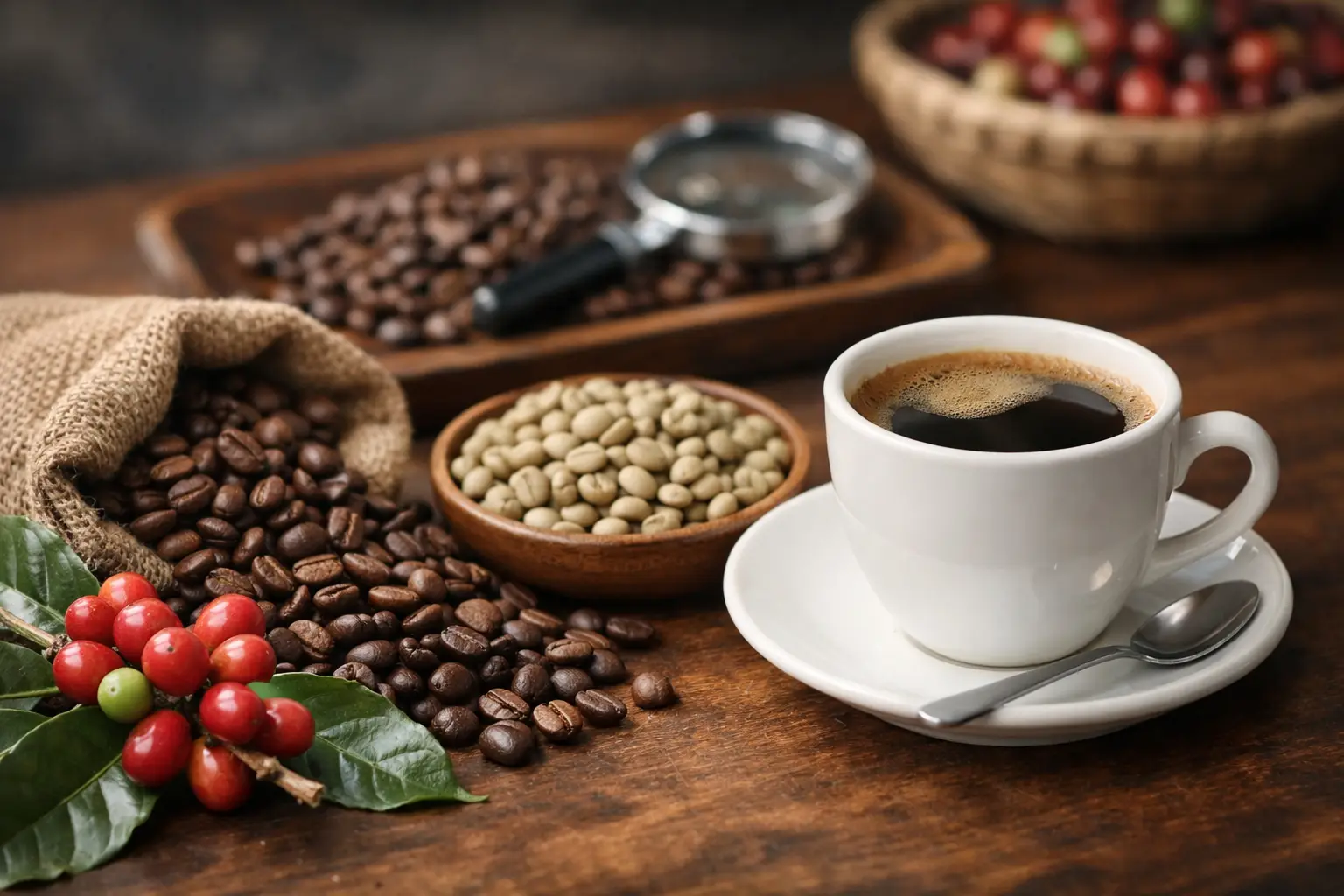
A coffee can taste smooth, fragrant, and beautifully balanced, yet still not qualify as specialty. That distinction matters because what makes coffee specialty grade is not branding, trend, or a higher price tag. It is a measurable standard shaped by origin, harvesting, processing, roasting, and cup quality, with very little room for shortcuts.
For people who care about purity in what they drink, this standard is worth understanding. Specialty coffee is not simply about stronger flavor or darker roast. It is about clean raw material, careful craftsmanship, and a cup that expresses where the coffee came from rather than hiding it behind bitterness, defects, or additives.
What makes coffee specialty grade in the first place?
At the most basic level, specialty grade coffee is coffee that scores 80 points or higher on a 100-point scale in professional cupping. That score is assigned by trained tasters who evaluate fragrance, aroma, flavor, aftertaste, acidity, body, balance, sweetness, uniformity, and the absence of defects.
The key detail is that specialty coffee begins long before roasting. A skilled barista cannot turn weak raw material into a specialty cup. If the green coffee has too many defects, inconsistent ripeness, poor processing, or storage damage, it will never reach specialty grade no matter how polished the final presentation looks.
This is why specialty grade is best understood as a chain of quality. Every step has to hold its standard. One weak link changes the cup.
The bean must start with exceptional raw quality
Coffee quality begins at origin, with variety, climate, altitude, soil, and farming practice. High-altitude farms often produce denser beans with greater complexity because slower cherry maturation allows sugars and acids to develop more fully. That does not mean altitude alone guarantees quality, but it is often part of the picture.
Variety matters too. Some coffee cultivars are prized for floral aromatics, citrus brightness, tea-like clarity, or layered sweetness. Ethiopian heirloom varieties, especially from regions such as Yirgacheffe, are often celebrated for their jasmine-like aroma, delicate fruit, and elegant structure. Those characteristics are not accidental. They reflect both genetics and place.
Farming practices also shape quality. Healthy plants, careful picking, and clean handling protect the potential already present in the fruit. Organic cultivation can support a cleaner expression in the cup, but organic certification by itself does not make coffee specialty grade. The coffee still has to perform sensorially. Specialty is earned in the cup, not assumed on the label.
Ripeness is one of the biggest quality separators
One of the clearest differences between commodity coffee and specialty coffee is how the cherries are harvested. Specialty coffee is usually handpicked with close attention to ripeness. Ripe cherries contain the sugar and flavor development needed for a sweet, expressive cup.
When farms strip-pick everything at once, underripe and overripe fruit often end up together. That creates uneven flavor. Underripe cherries can produce grassy, peanut-like, or sharply sour notes. Overripe or poorly handled cherries may introduce fermented or dull flavors.
This is where the phrase handpicked beans means something real when it is done properly. Selective harvesting costs more and takes more time, but it protects cup quality in a way machines and bulk methods often cannot.
Processing can reveal or damage the coffee
Once coffee cherries are picked, the seeds inside must be processed. This stage has a major effect on cleanliness, sweetness, and flavor character. Washed coffees often show brighter acidity and clearer origin notes. Natural coffees can bring heavier fruit, jammy sweetness, and more body. Honey-processed coffees tend to sit somewhere in between.
None of these methods is automatically better. What matters is precision. Clean water, controlled drying, proper fermentation, and stable storage are essential. Poor processing can introduce moldy, phenolic, or overly fermented notes that lower the score quickly.
That is one reason specialty coffee often tastes more transparent. Instead of random off-flavors, you get a cup with intention. Floral notes feel floral. Citrus tastes vivid rather than sour. Chocolate tastes sweet rather than burnt.
Defects matter more than many people realize
A coffee can lose specialty status because of physical defects in the green beans or sensory defects in the cup. Black beans, sour beans, insect damage, severe breakage, and foreign matter all count against quality. Too many defects disqualify the lot.
This part is less romantic than tasting notes, but it is essential. Specialty coffee is held to a stricter standard because consistency matters. A beautiful bag design and origin story cannot compensate for damaged coffee.
For consumers, this has a practical benefit. When coffee is sorted carefully and graded rigorously, the cup is usually cleaner and more reliable. You are less likely to get the harshness, astringency, or muddy finish that lower-grade coffee often hides beneath dark roasting or sweet syrups.
Roasting should develop the coffee, not cover it
Roasting has enormous influence, but it does not create quality from nothing. In specialty coffee, roasting is meant to reveal the best qualities of the bean. That means preserving sweetness, balancing acidity, and highlighting the coffee’s natural character.
If a roaster pushes every coffee too dark, many origin differences disappear. Floral Ethiopian coffee, nutty Brazilian coffee, and fruit-forward Kenyan coffee can all start to taste similarly smoky and bitter. Dark roasts are not inherently wrong – some people genuinely prefer them – but if roast intensity overwhelms the bean, it becomes harder to appreciate what made the coffee special to begin with.
A well-roasted specialty coffee should taste intentional. It may be light and tea-like, medium and caramel-sweet, or deeper and more chocolate-driven. The point is balance and clarity, not just intensity.
Freshness, grinding, and brewing still affect the final result
Even an excellent coffee can fall flat if it is stale, ground poorly, or brewed without care. Specialty grade refers to the coffee itself, yet the drinking experience depends on final preparation too.
Fresh roasting helps preserve volatile aromatics. Proper grinding creates even extraction. Water quality, brew ratio, temperature, and contact time all influence whether the cup tastes sweet and layered or hollow and sharp.
This is why specialty cafés pay close attention to details that may seem small from the outside. Dialing in espresso, adjusting the grind through the day, and choosing a brew method that suits the bean are not rituals for show. They are part of protecting the coffee’s quality.
Why specialty grade coffee often feels cleaner
Many people notice that specialty coffee tastes cleaner, but also that it feels cleaner as part of their routine. That is not only about sensory clarity. It is also about composition and preparation.
When the coffee itself is sweet, aromatic, and balanced, it needs less correction in the cup. You do not have to bury it under refined sugar, flavored syrups, or heavy cream just to make it pleasant. For wellness-minded drinkers, that changes the experience. The coffee stands on its own merits.
This is especially relevant for those who want a more intentional café habit. A carefully sourced, specialty-grade coffee paired with natural sweetening or taken black can align more naturally with a health-conscious lifestyle than drinks built around processed flavoring.
What makes coffee specialty grade is also what makes it honest
There is a deeper reason specialty coffee matters. It asks the cup to tell the truth. If the farm work was careless, if processing was rushed, if defects were ignored, if roasting was used as camouflage, the coffee will show it.
The opposite is true as well. When the coffee is grown at the right altitude, picked at peak ripeness, processed with care, sorted thoroughly, roasted with precision, and brewed thoughtfully, the cup becomes vivid and expressive. You taste origin, variety, and craft instead of noise.
That does not mean every specialty coffee has to be rare, ultra-light, or dramatically fruity. Some are gentle, chocolatey, and comforting. Some are bright and floral. Some are best as espresso, others as filter. Specialty grade is not one flavor profile. It is a quality threshold.
For anyone choosing coffee with more intention, that threshold is a useful guide. It points you toward beans with integrity, not just marketing polish. And once you learn what a truly clean, expressive cup tastes like, it becomes much harder to settle for coffee that only imitates quality.
